SUMMER 2024
GEMINI ON THE FLIP
Rabbit R1 and Humane Pin brought about a glimpse of what AI-centric devices could look and feel like. It’s easy to see how the future of mobile technology will transform to be an agentic operating system as voice interaction and general utility of AIs become diverse and more reliable.
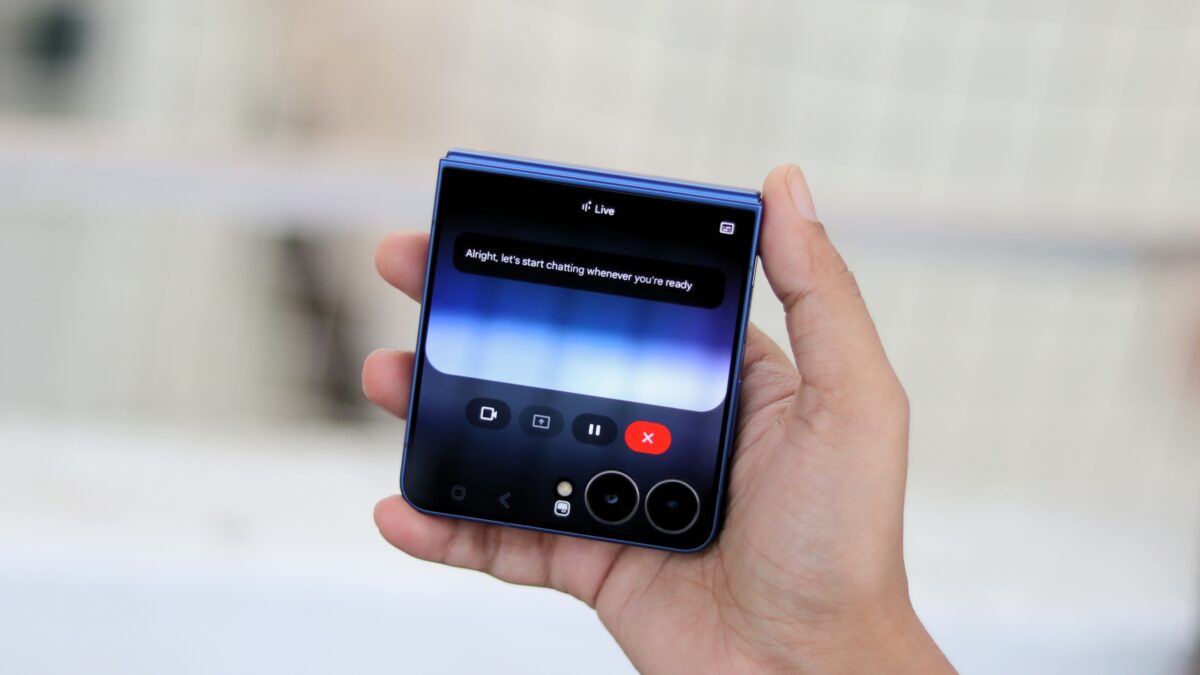
This project started as an inquiry into how the Galaxy Z Flip could be repositioned as an AI-centric device. Its cover screen could serve as an exclusive window into a personal AI agent, providing on-demand query and information fetching, while also summarizing important notifications and blocking any unnecessary distractions.
After presenting to Google, the concept was adopted and launched on the Flip 6 in Fall of 2025.
Below are some of the concept sketches and feature sets we developed.
Doing more with less
Our initial exploration looked into how much text or general information could the small cover screen comfortably support. We knew we needed to avoid the verbosity of LLMs.
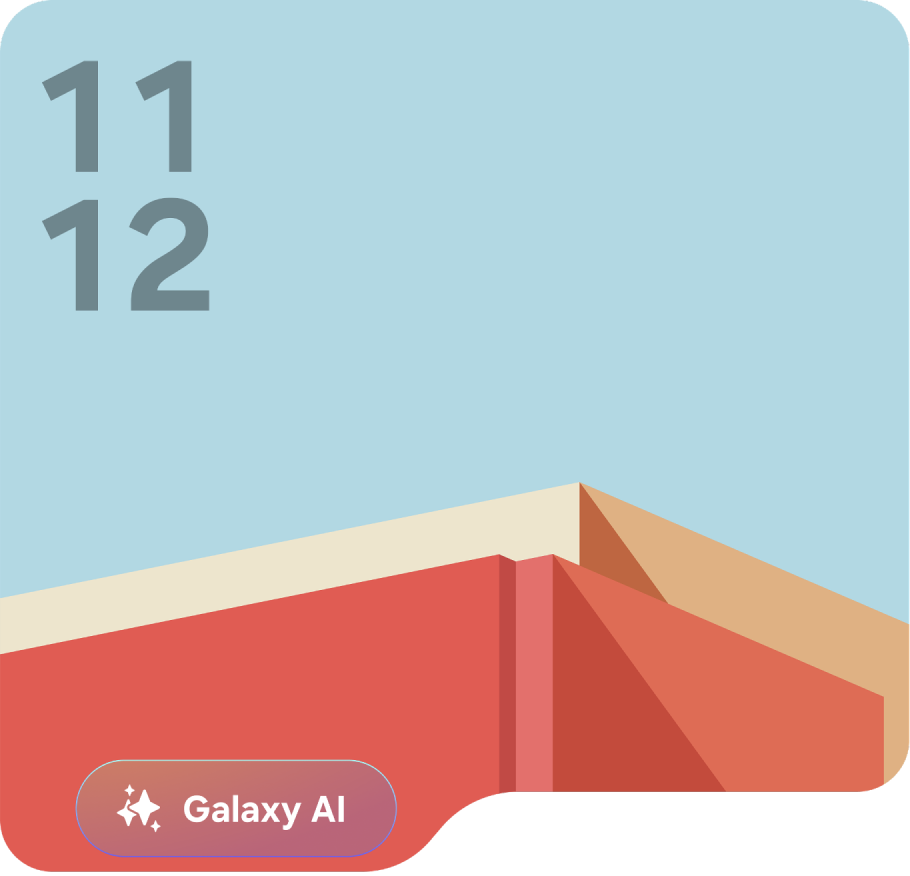
Cover screen wallpaper.
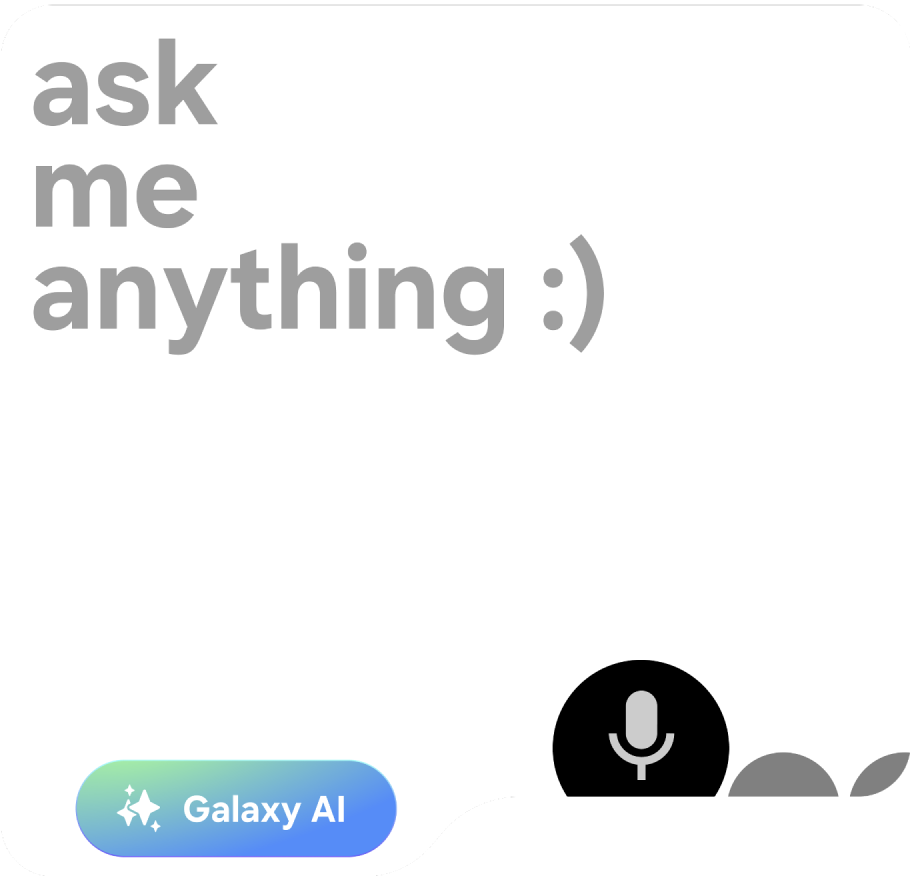
Activating AI mode brings about a full-screen change with the AI awaiting user query input
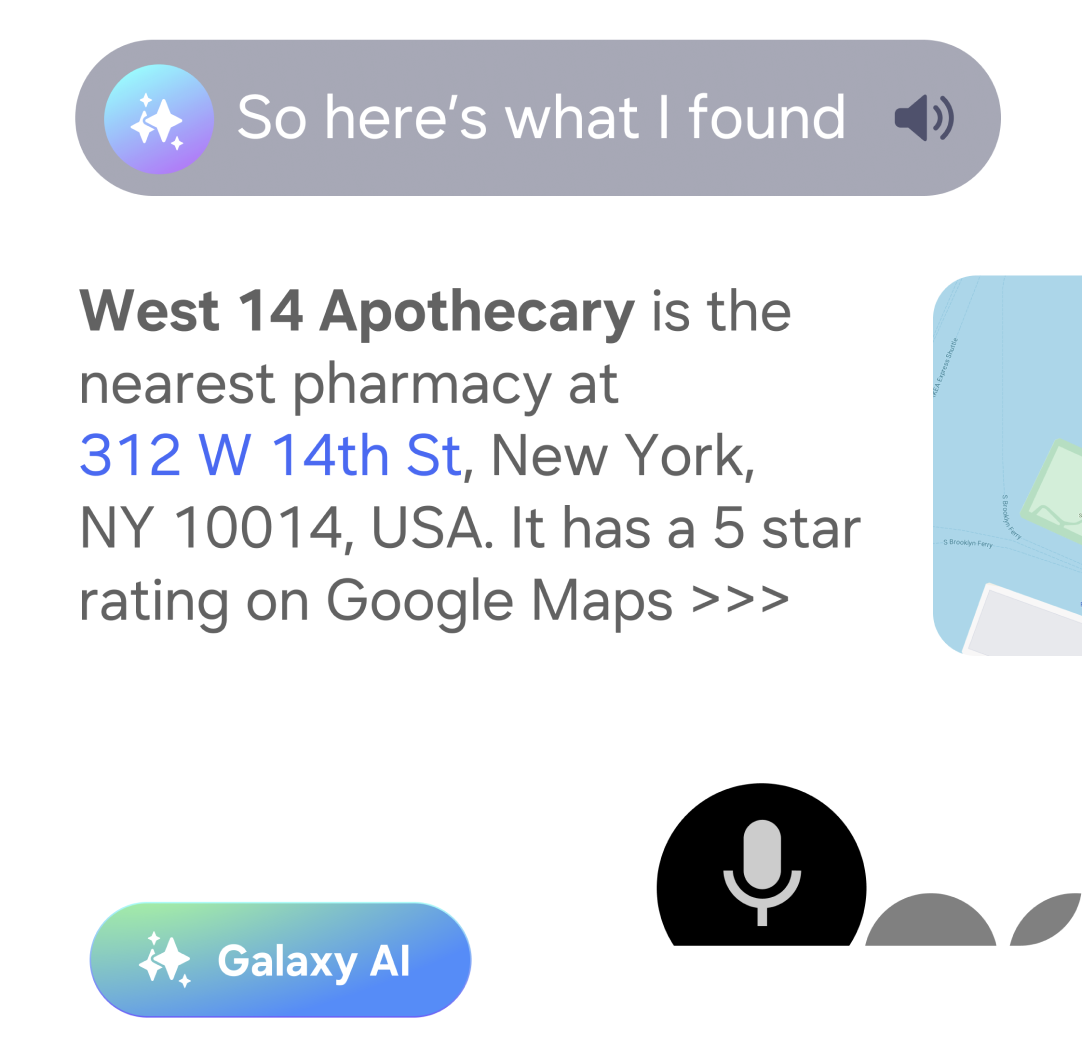
The answer is limited to a single sentence with no more than 40–50 words.
Images are prioritized with summarized audio voiceover
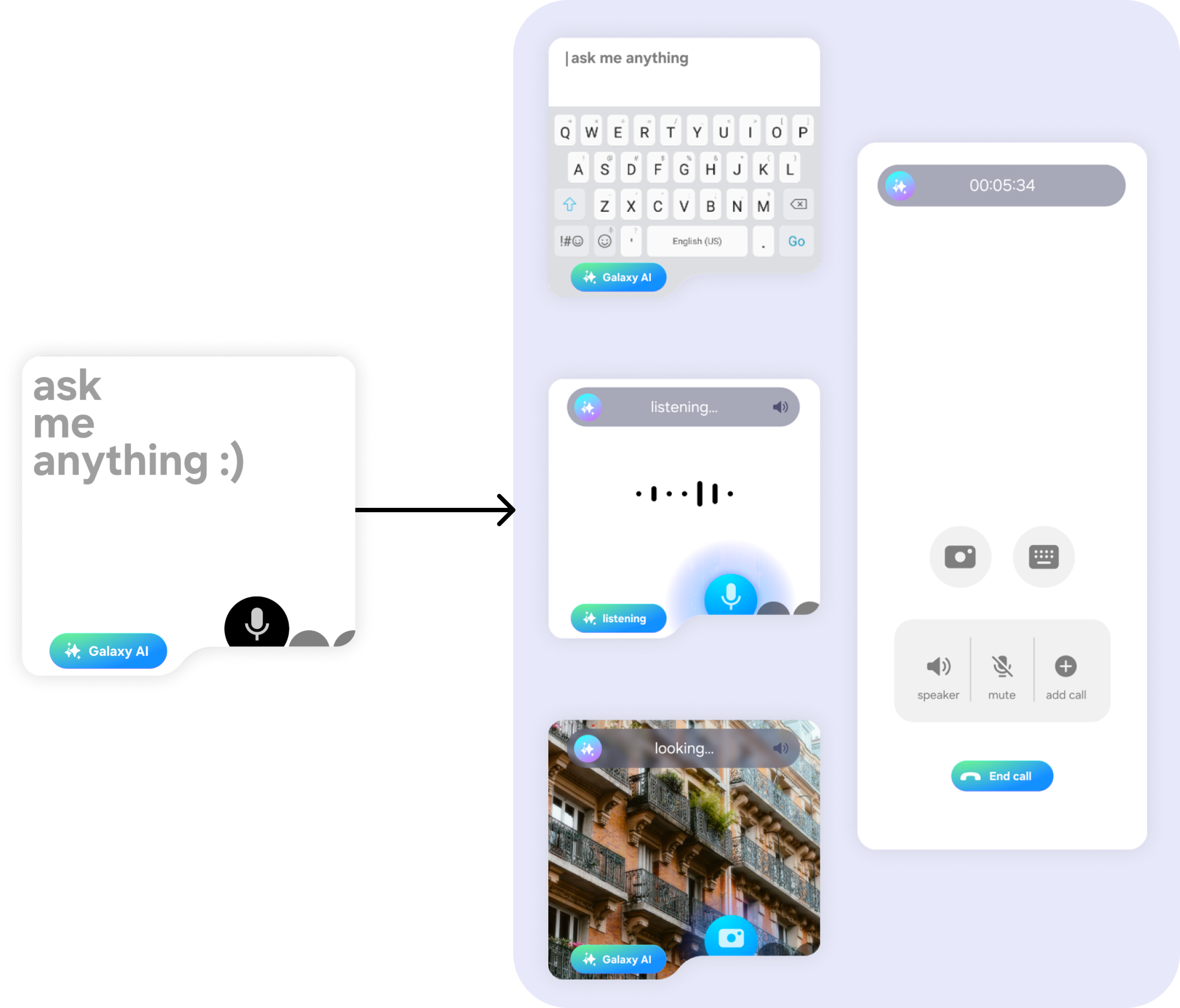
A Multimodal Assistant
It was imperative that the AI agent be able to move flexibly between text, voice, and image in one conversation or context.
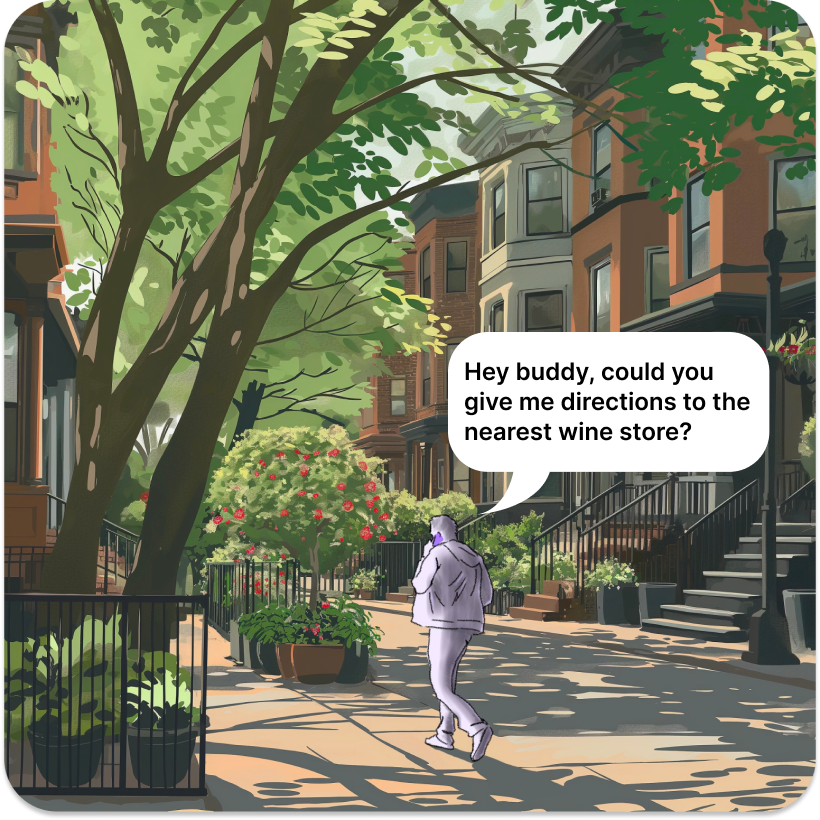
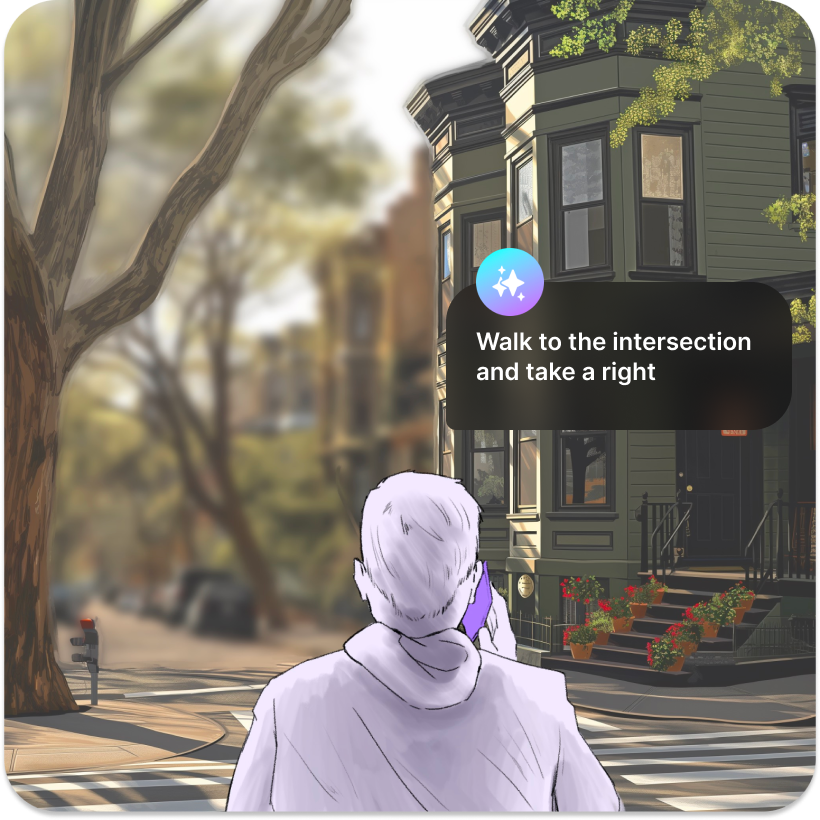
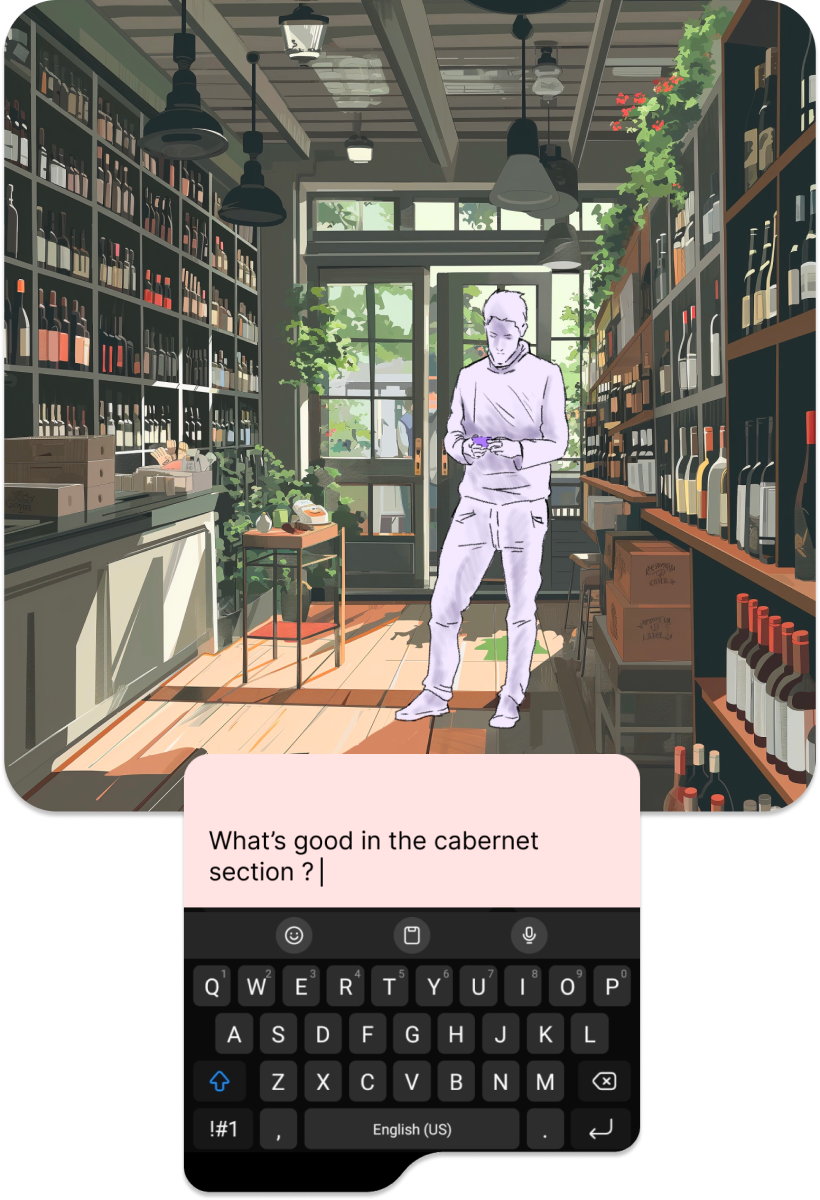
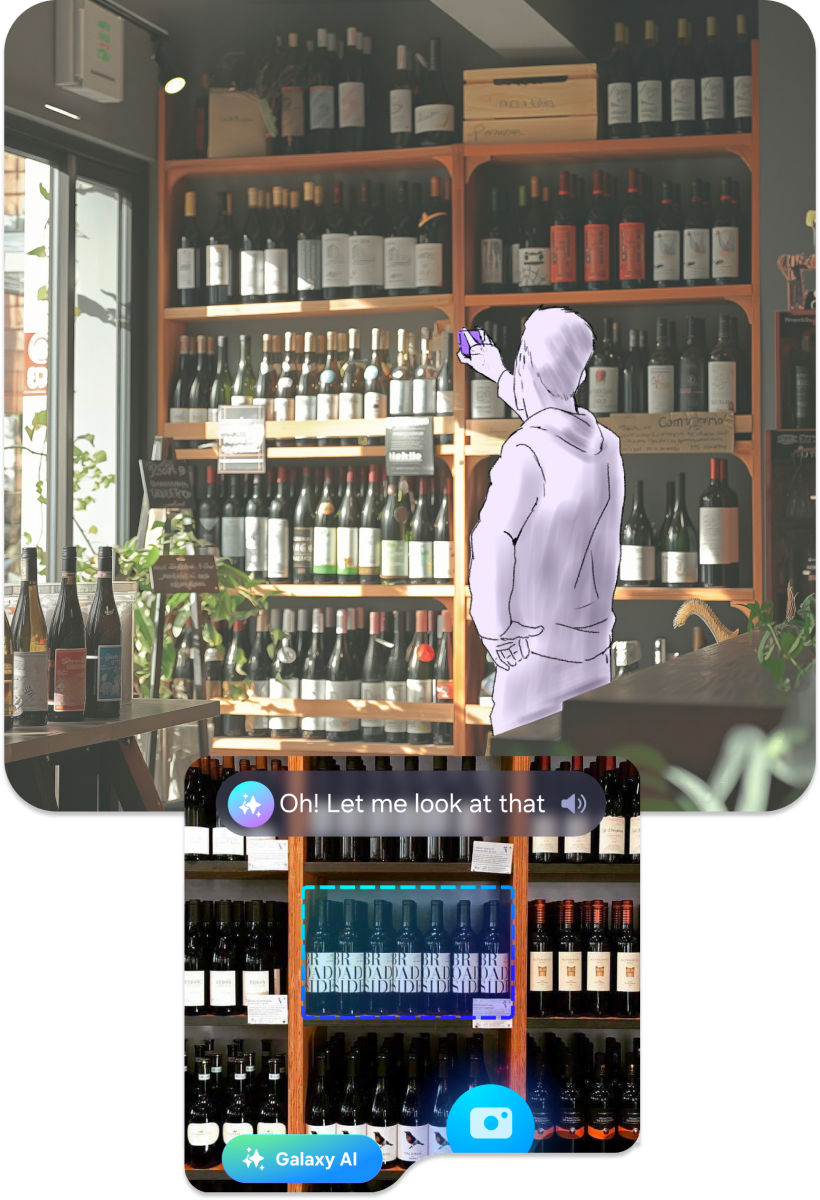
This storyboard demonstrates multimodal use in a shopping scenario: talking with AI via a phone call and asking for directions; switching to text communication to be more discreet; and then using the camera to receive AI’s recommendations visually.
Proactive assistant
In addition to actively interacting with AI, I also explored how the AI would communicate with the user.
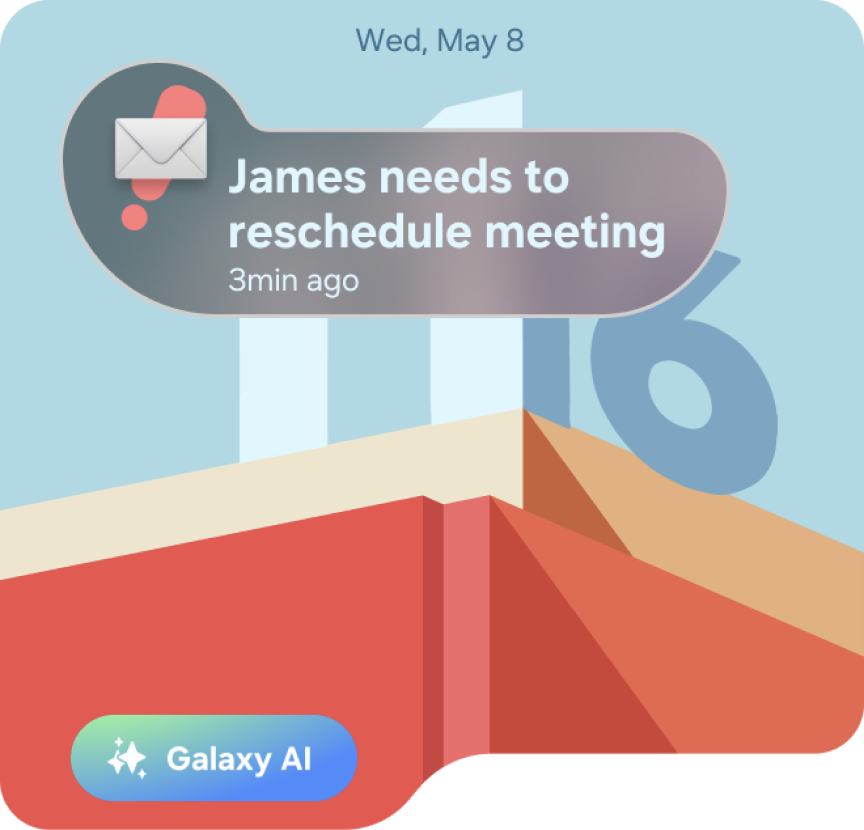
Summarizes emails and provides next steps to do on your behalf.
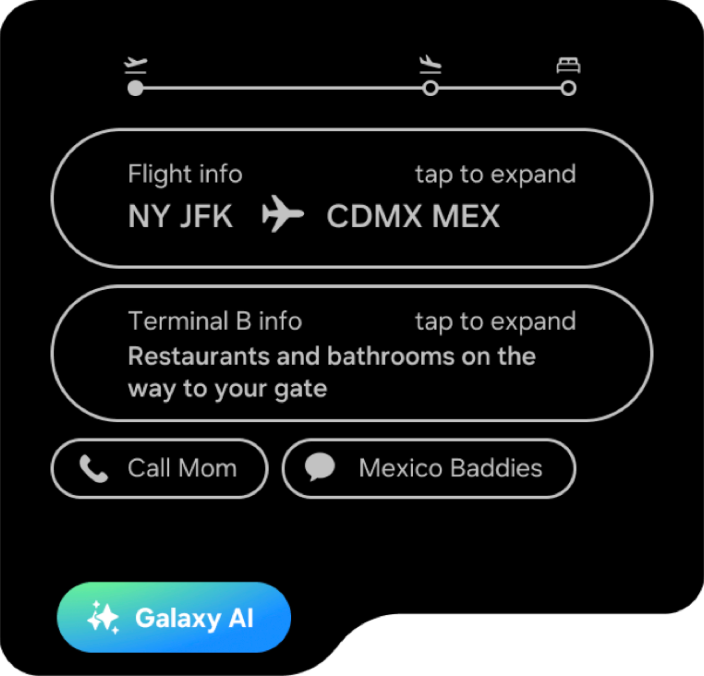
Contextually displays relevant information and quick actions based on location and activity.
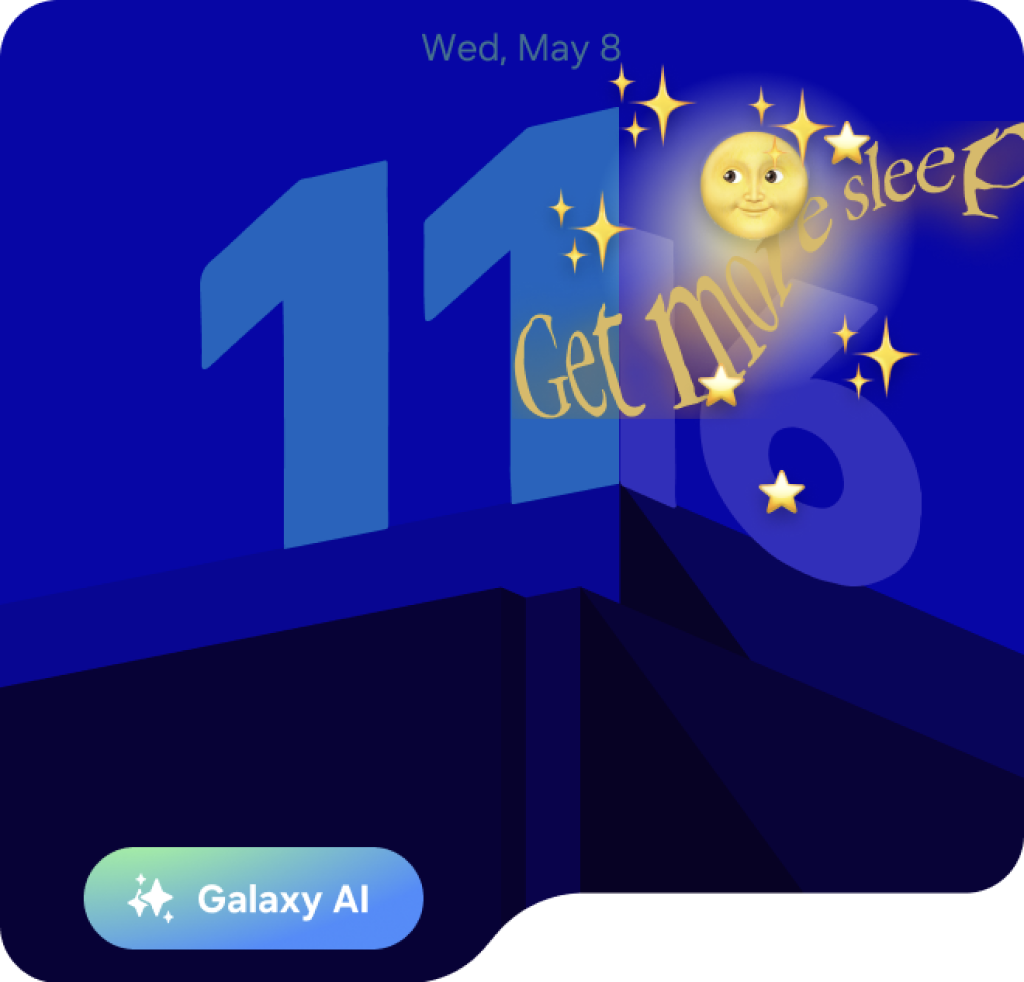
Contextually displays recommendations based on timing and routine.
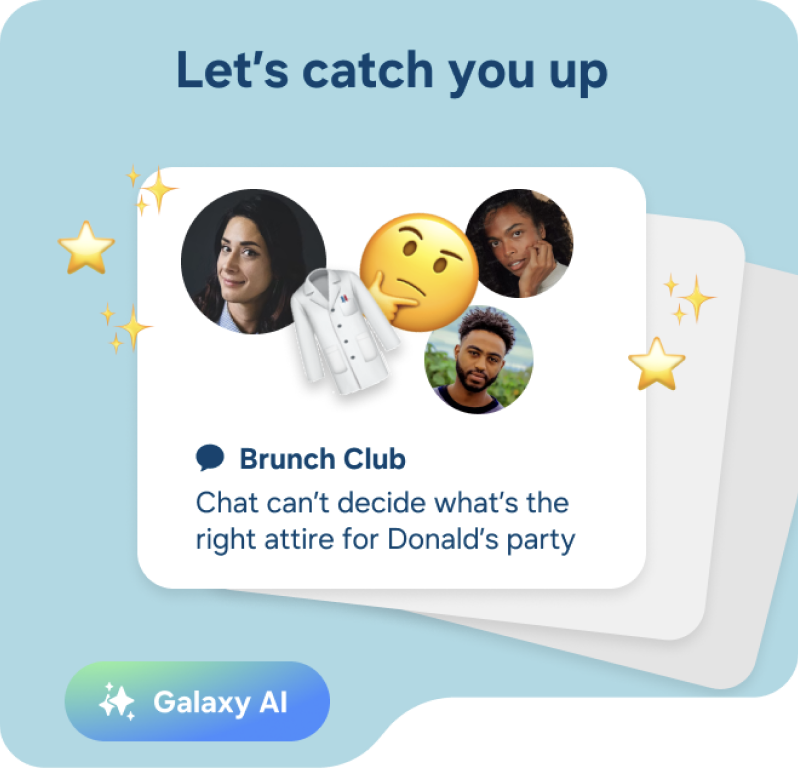
Summarizes conversations throughout your SNS ecosystem to keep you up-to-date.
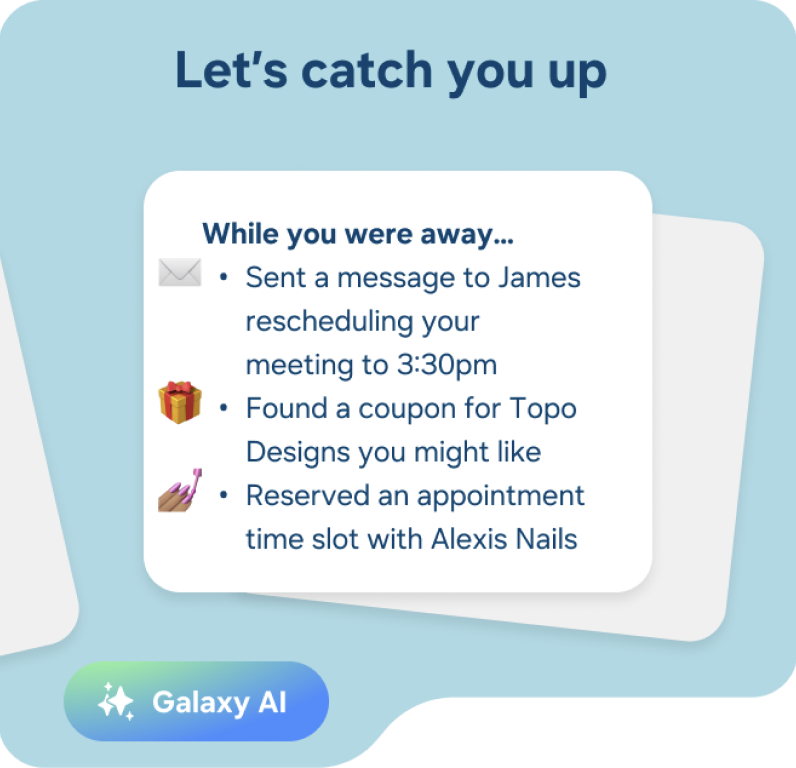
Lists all the tasks it completed while you were aware.
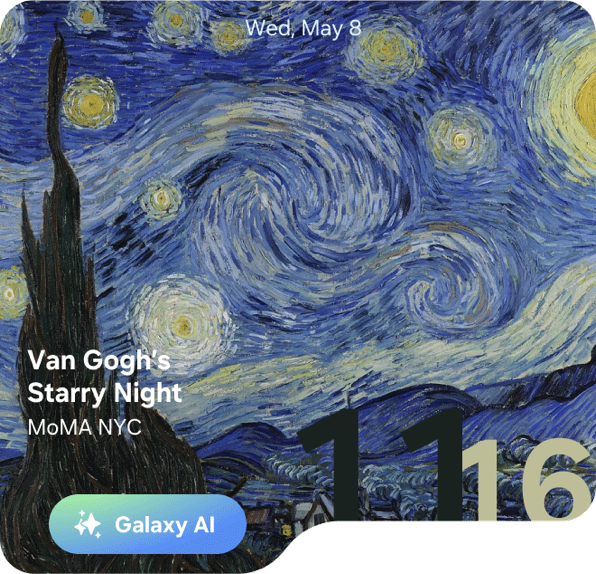
Can personalize the aesthetics of your device to reflect your location or on-going activity.
Exploring other system organization
The project was so successful that we were asked to do some more studies on refining the interface as well as providing more options on how the cover screen UX could be organized.
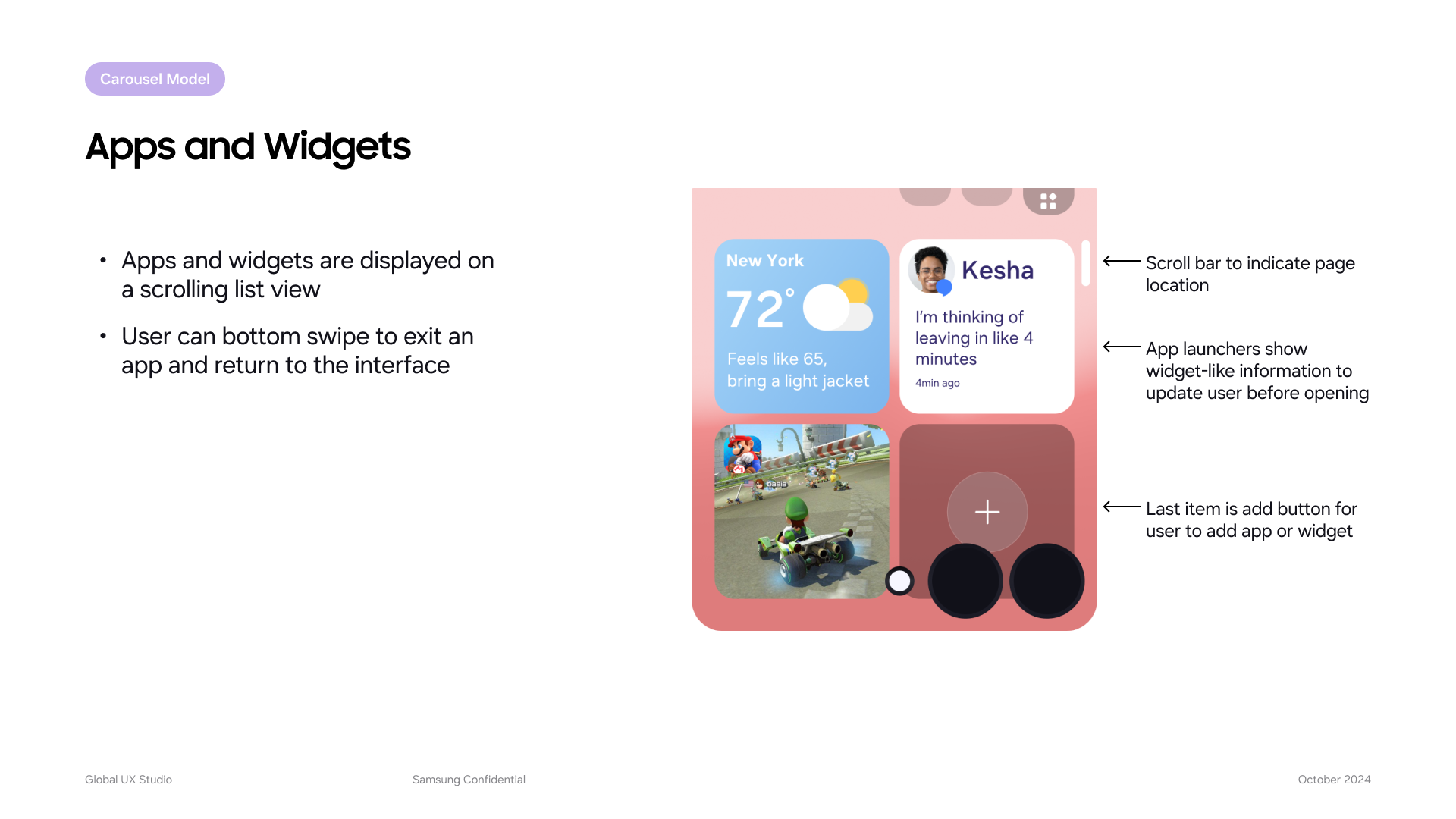
A carousel model that has grouped categorizes for widgets, AI invocation, and intelligent notifications.
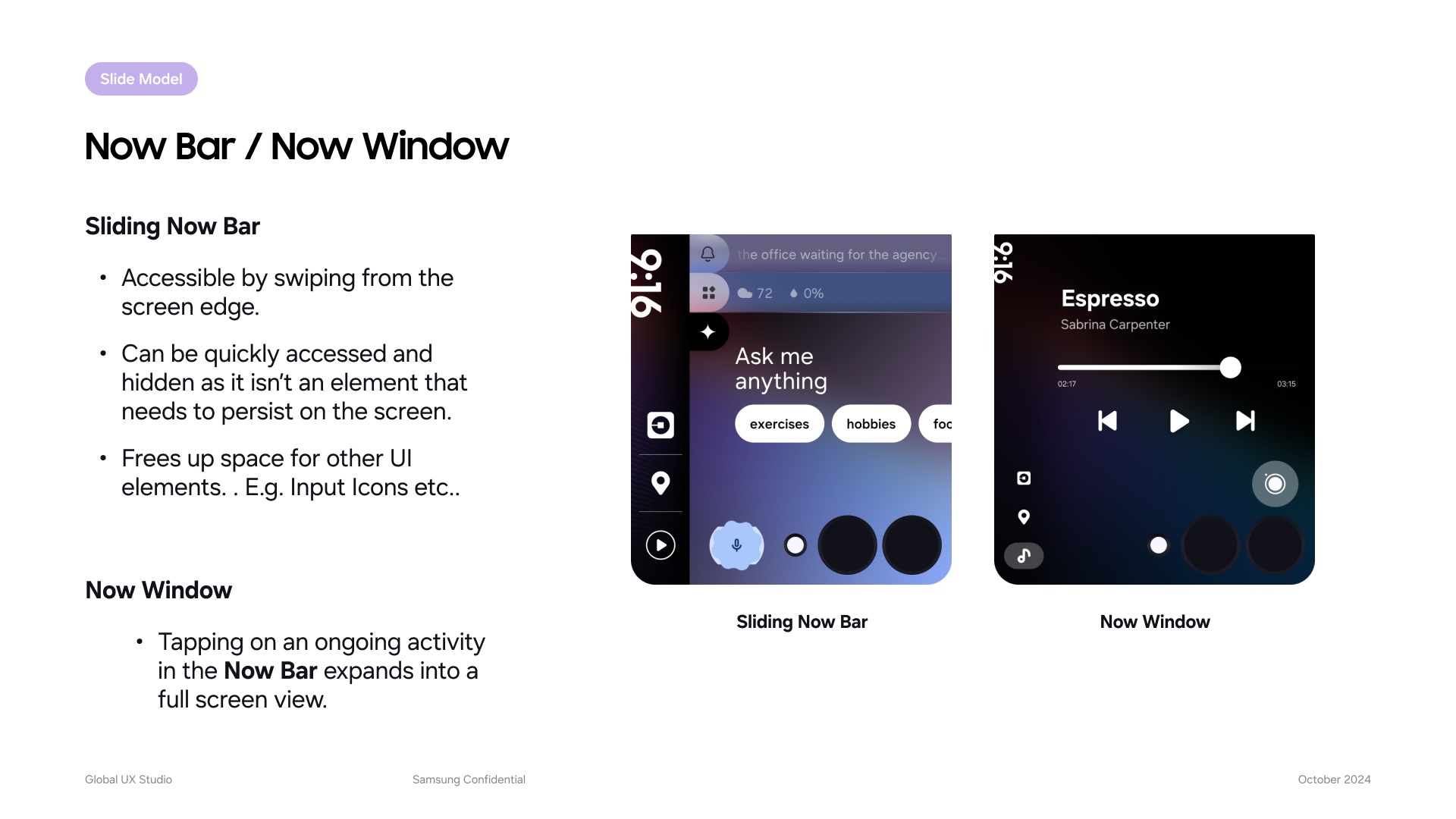
Slide model which has stacked tickers for glancible information, but can also be expanded.
Versatility in form
I think my favorite part of this project was ideating on how the form factor and the sensors could be used to transform the Z Flip into a specialized device super powered by AI.
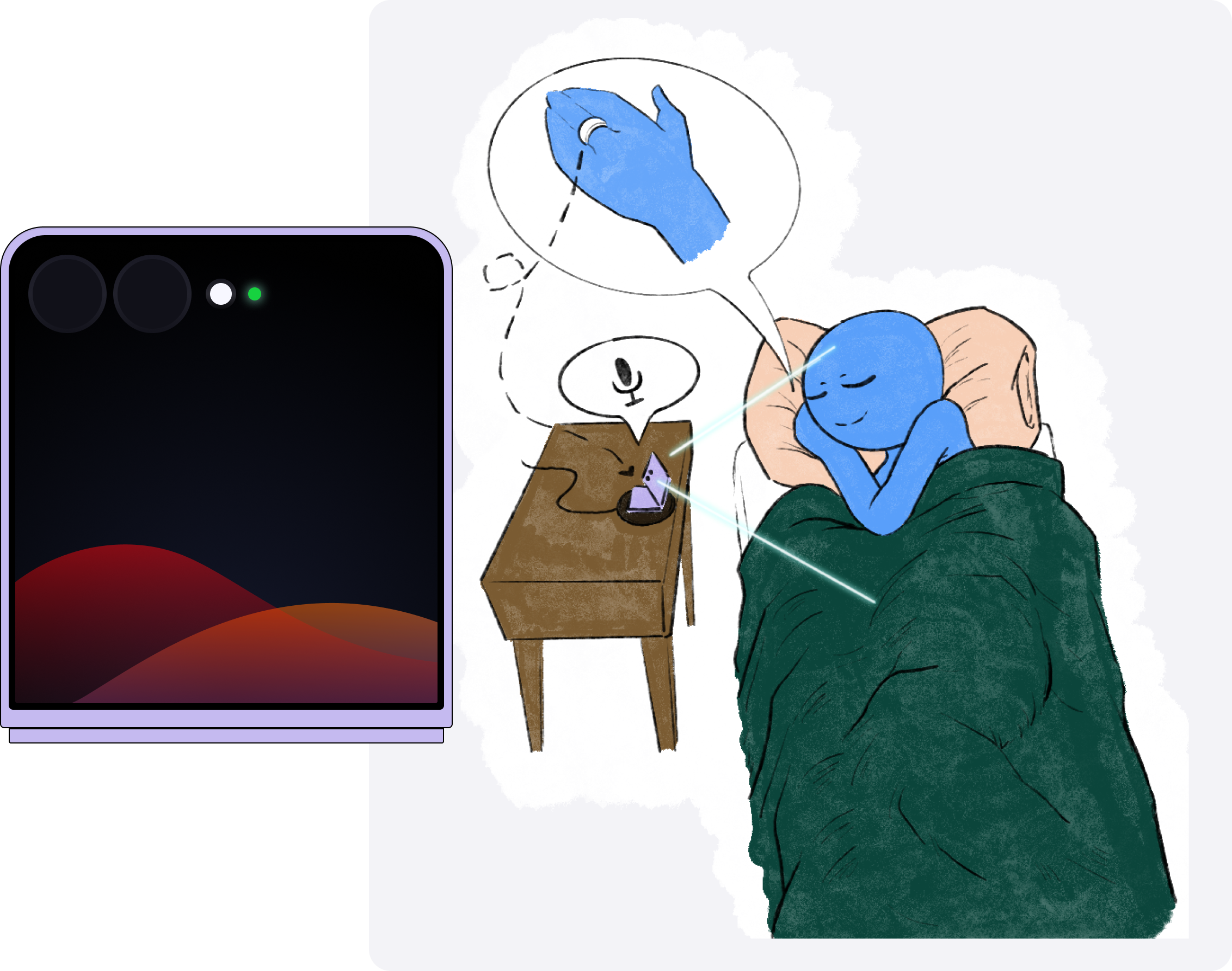
With vision, audio, and vitals, the device could become a state-of-the-art sleep tracking device —
or a cogent study partner —
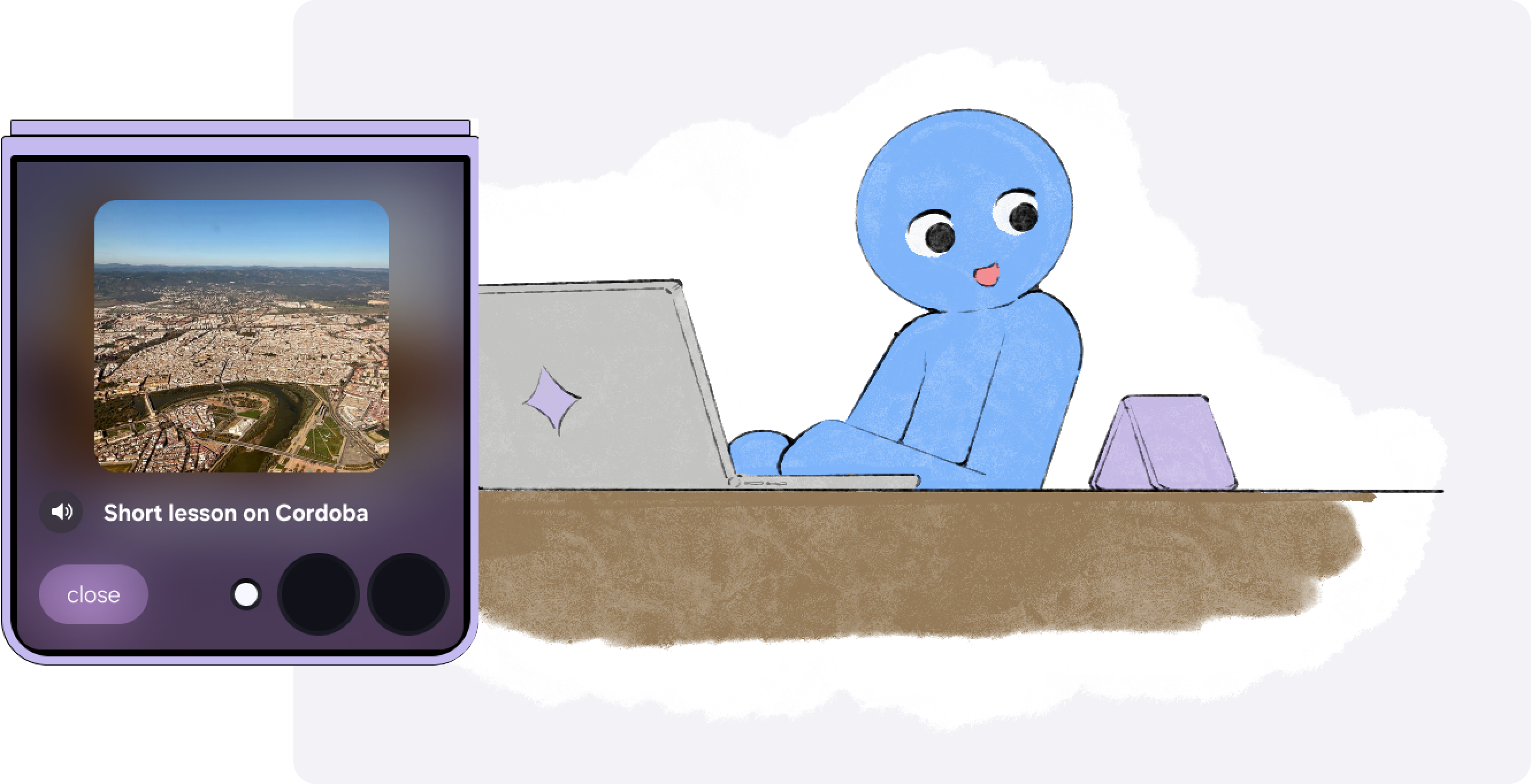
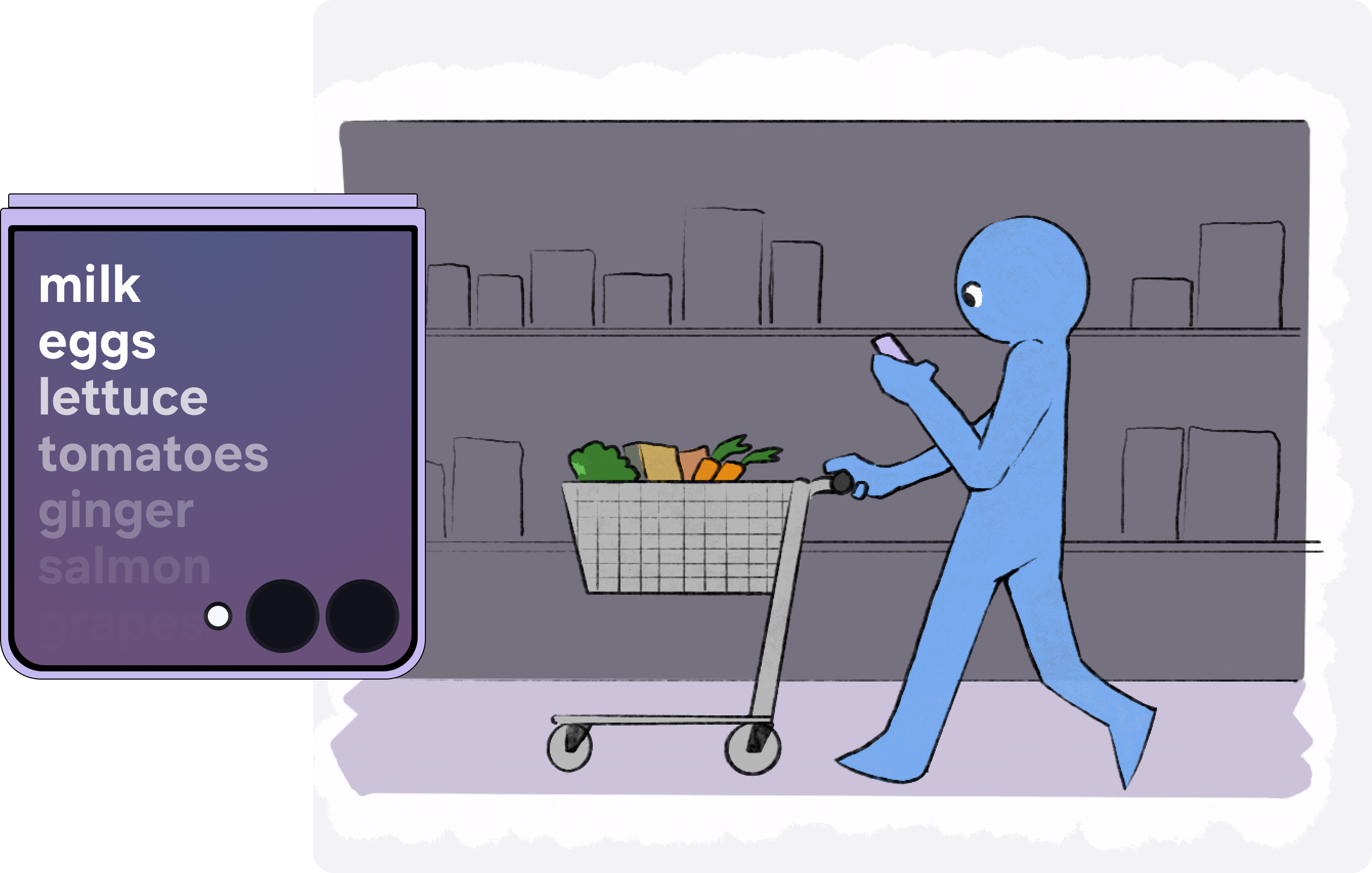
or the best shopping helper.
RECAP
PROBLEM
Agentic experiences are verbose and not designed for on-the-go use.
Research
Anthropic research on common use cases for AI.
Impact
Key user flows and design structure was incorporated into the use of Gemini on the Galaxy Z Flip 7 in collaboration with Google.
AI HOME
Home
Patents and Awards
About
SUMMER 2024
GEMINI ON THE FLIP
Rabbit R1 and Humane Pin brought about a glimpse of what AI-centric devices could look and feel like. It’s easy to see how the future of mobile technology will transform to be an agentic operating system as voice interaction and general utility of AIs become diverse and more reliable.
This project started as an inquiry into how the Galaxy Z Flip could be repositioned as an AI-centric device. Its cover screen could serve as an exclusive window into a personal AI agent, providing on-demand query and information fetching, while also summarizing important notifications and blocking any unnecessary distractions.
After presenting to Google, the concept was adopted and launched on the Flip 6 in Fall of 2025. Below are some of the concept sketches and feature sets we developed.
Doing more with less
Our initial exploration looked into how much text or general information could the small cover screen comfortably support. We knew we needed to avoid the verbosity of LLMs.
Cover screen wallpaper.
Activating AI mode brings about a full-screen change with the AI awaiting user query input
The answer is limited to a single sentence with no more than 40–50 words.
Images are prioritized with summarized audio voiceover
A Multimodal Assistant
It was imperative that the AI agent be able to move flexibly between text, voice, and image in one conversation or context.
This storyboard demonstrates multimodal use in a shopping scenario: talking with AI via a phone call and asking for directions; switching to text communication to be more discreet; and then using the camera to receive AI’s recommendations visually.
Proactive assistant
In addition to actively interacting with AI, I also explored how the AI would communicate with the user.
Summarizes emails and provides next steps to do on your behalf.
Contextually displays relevant information and quick actions based on location and activity.
Contextually displays recommendations based on timing and routine.
Summarizes conversations throughout your SNS ecosystem to keep you up-to-date.
Lists all the tasks it completed while you were aware.
Can personalize the aesthetics of your device to reflect your location or on-going activity.
Exploring other system organization
The project was so successful that we were asked to do some more studies on refining the interface as well as providing more options on how the cover screen UX could be organized.
A carousel model that has grouped categorizes for widgets, AI invocation, and intelligent notifications.
Slide model which has stacked tickers for glancible information, but can also be expanded.
Versatility in form
I think my favorite part of this project was ideating on how the form factor and the sensors could be used to transform the Z Flip into a specialized device super powered by AI.
With vision, audio, and vitals, the device could become a state-of-the-art sleep tracking device —
or a cogent study partner —
or the best shopping helper.
RECAP
PROBLEM
Agentic experiences are verbose and not designed for on-the-go use.
Research
Anthropic research on common use cases for AI.
Impact
Key user flows and design structure was incorporated into the use of Gemini on the Galaxy Z Flip 7 in collaboration with Google.
AI HOME
Home
Patents and Awards
About
SUMMER 2024
GEMINI ON THE FLIP
Rabbit R1 and Humane Pin brought about a glimpse of what AI-centric devices could look and feel like. It’s easy to see how the future of mobile technology will transform to be an agentic operating system as voice interaction and general utility of AIs become diverse and more reliable.
This project started as an inquiry into how the Galaxy Z Flip could be repositioned as an AI-centric device. Its cover screen could serve as an exclusive window into a personal AI agent, providing on-demand query and information fetching, while also summarizing important notifications and blocking any unnecessary distractions.
After presenting to Google, the concept was adopted and launched on the Flip 6 in Fall of 2025.
Below are some of the concept sketches and feature sets we developed.
Doing more with less
Our initial exploration looked into how much text or general information could the small cover screen comfortably support. We knew we needed to avoid the verbosity of LLMs.
Cover screen wallpaper.
Activating AI mode brings about a full-screen change with the AI awaiting user query input
The answer is limited to a single sentence with no more than 40–50 words.
Images are prioritized with summarized audio voiceover
A Multimodal Assistant
It was imperative that the AI agent be able to move flexibly between text, voice, and image in one conversation or context.
This storyboard demonstrates multimodal use in a shopping scenario: talking with AI via a phone call and asking for directions; switching to text communication to be more discreet; and then using the camera to receive AI’s recommendations visually.
Proactive assistant
In addition to actively interacting with AI, I also explored how the AI would communicate with the user.
Summarizes emails and provides next steps to do on your behalf.
Contextually displays relevant information and quick actions based on location and activity.
Contextually displays recommendations based on timing and routine.
Summarizes conversations throughout your SNS ecosystem to keep you up-to-date.
Lists all the tasks it completed while you were aware.
Can personalize the aesthetics of your device to reflect your location or on-going activity.
Exploring other system organization
The project was so successful that we were asked to do some more studies on refining the interface as well as providing more options on how the cover screen UX could be organized.
A carousel model that has grouped categorizes for widgets, AI invocation, and intelligent notifications.
Slide model which has stacked tickers for glancible information, but can also be expanded.
Versatility in form
I think my favorite part of this project was ideating on how the form factor and the sensors could be used to transform the Z Flip into a specialized device super powered by AI.
With vision, audio, and vitals, the device could become a state-of-the-art sleep tracking device —
or a cogent study partner —
or the best shopping helper.
RECAP
PROBLEM
Agentic experiences are verbose and not designed for on-the-go use.
Research
Anthropic research on common use cases for AI.
Impact
Key user flows and design structure was incorporated into the use of Gemini on the Galaxy Z Flip 7 in collaboration with Google.
AI HOME
Home
Patents and Awards
About