WINTER 2023
PEOPLE-CENTRIC OS
An early exploration into looking at how we could organize system UX based on the people in our phones. Instead of diving into apps, what if our data was organized by the people we engage with?
Focusing on People
This visual exploration looked into how people could be brought out of apps and into various touch points throughout system UI.
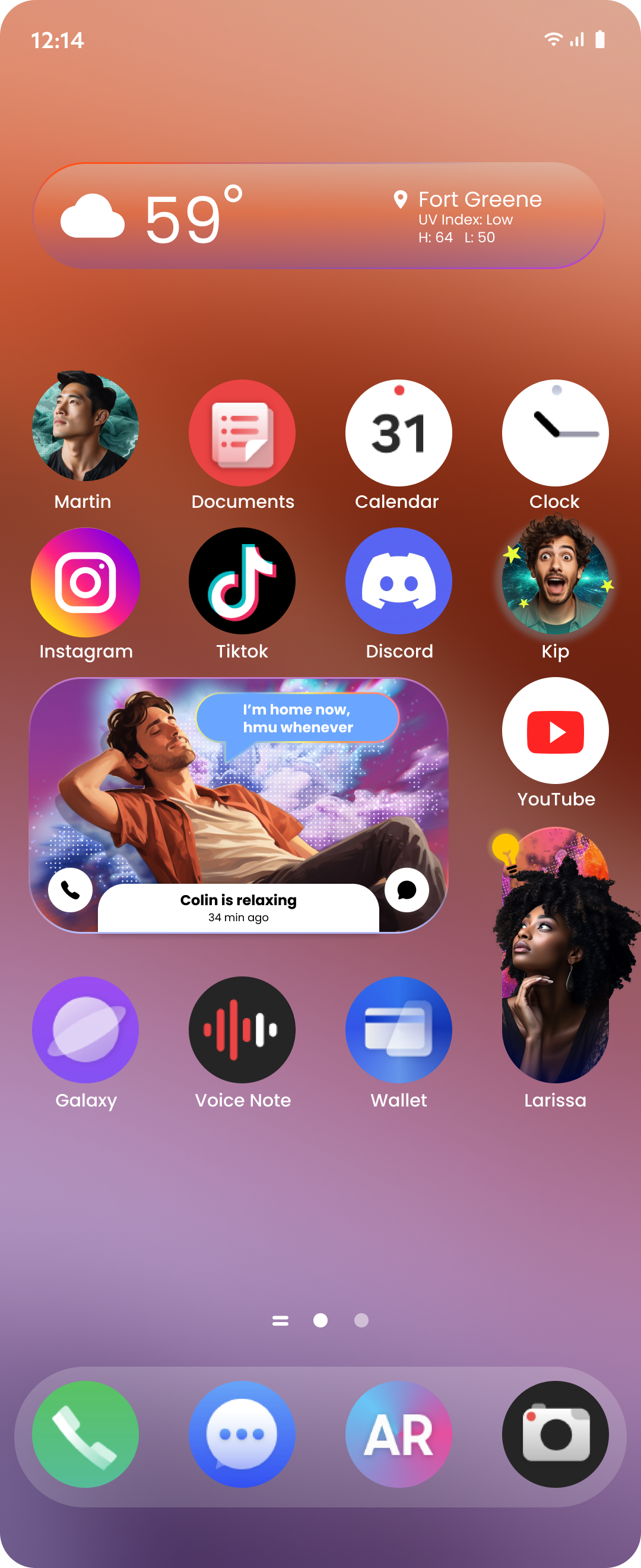
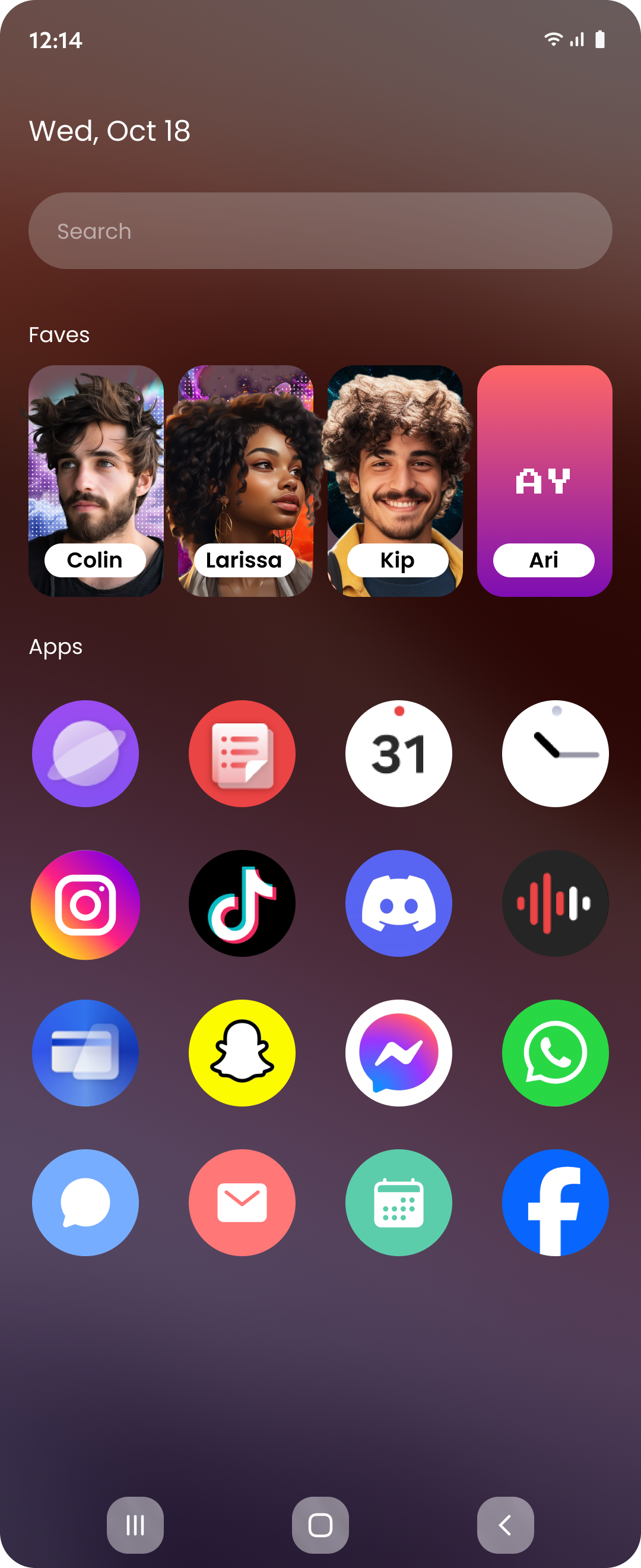
People on the home screen can be fun as well as communicate emotional details
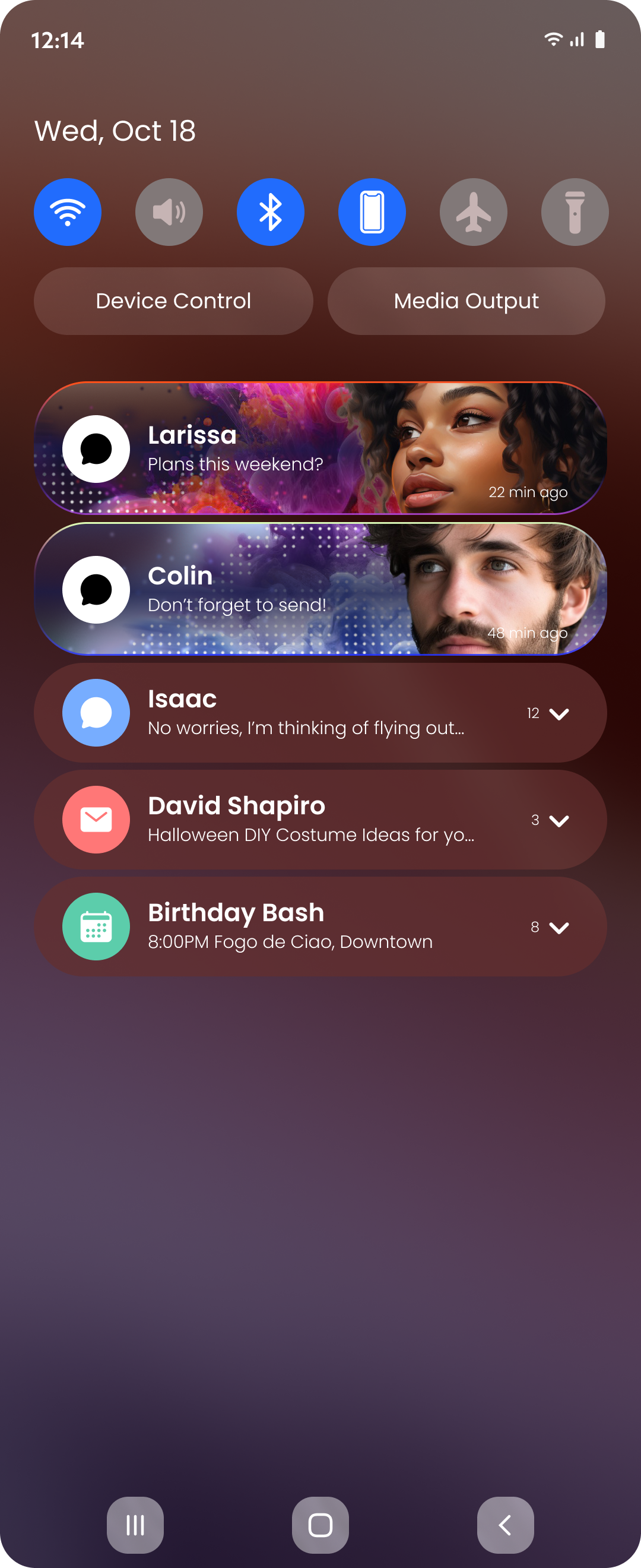
Important people could be more visually distinguished
People could exist in frequented touch points like recents page
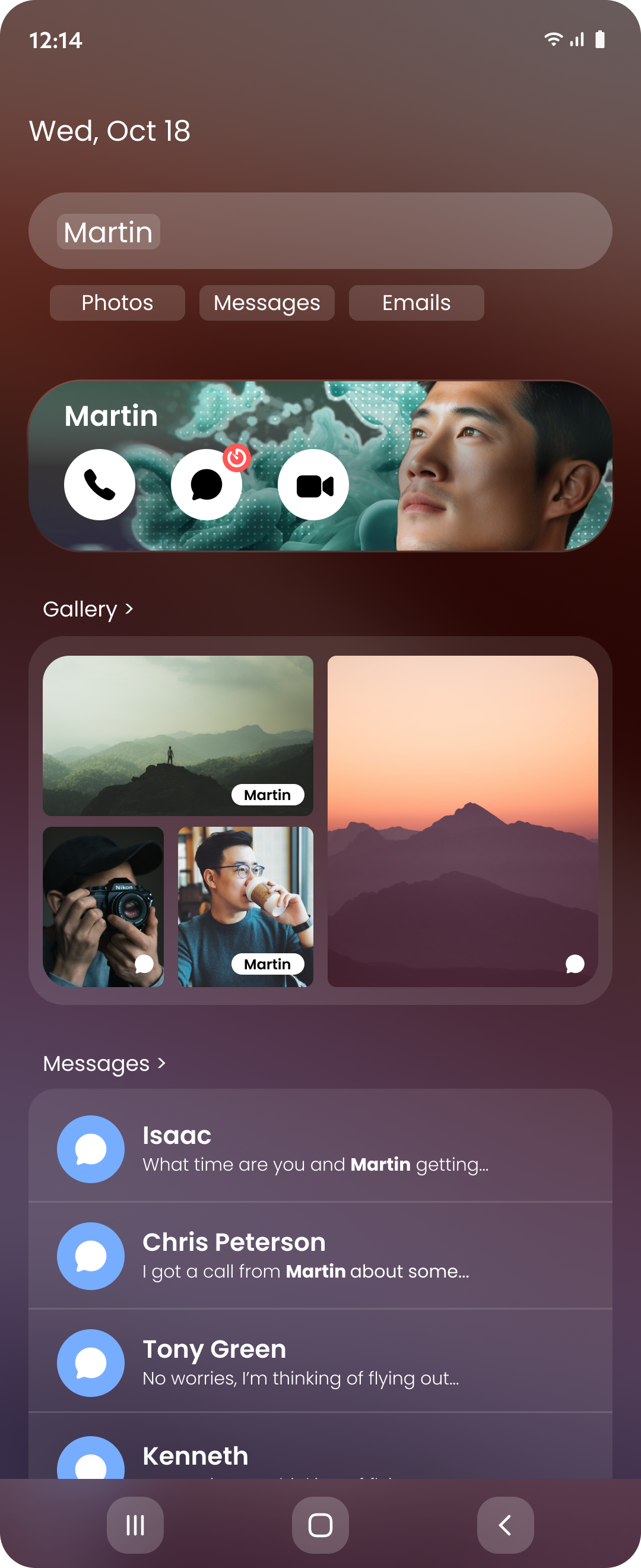
Search can also surface up contextual media or messages from that individual
Gen AI and Personalization
Generative AI can deploy a standardized aesthetic across system UI to give people the superpower to further personalize their devices.
The examples below show how Kip can customize his UI with a neon green, galactic theme.
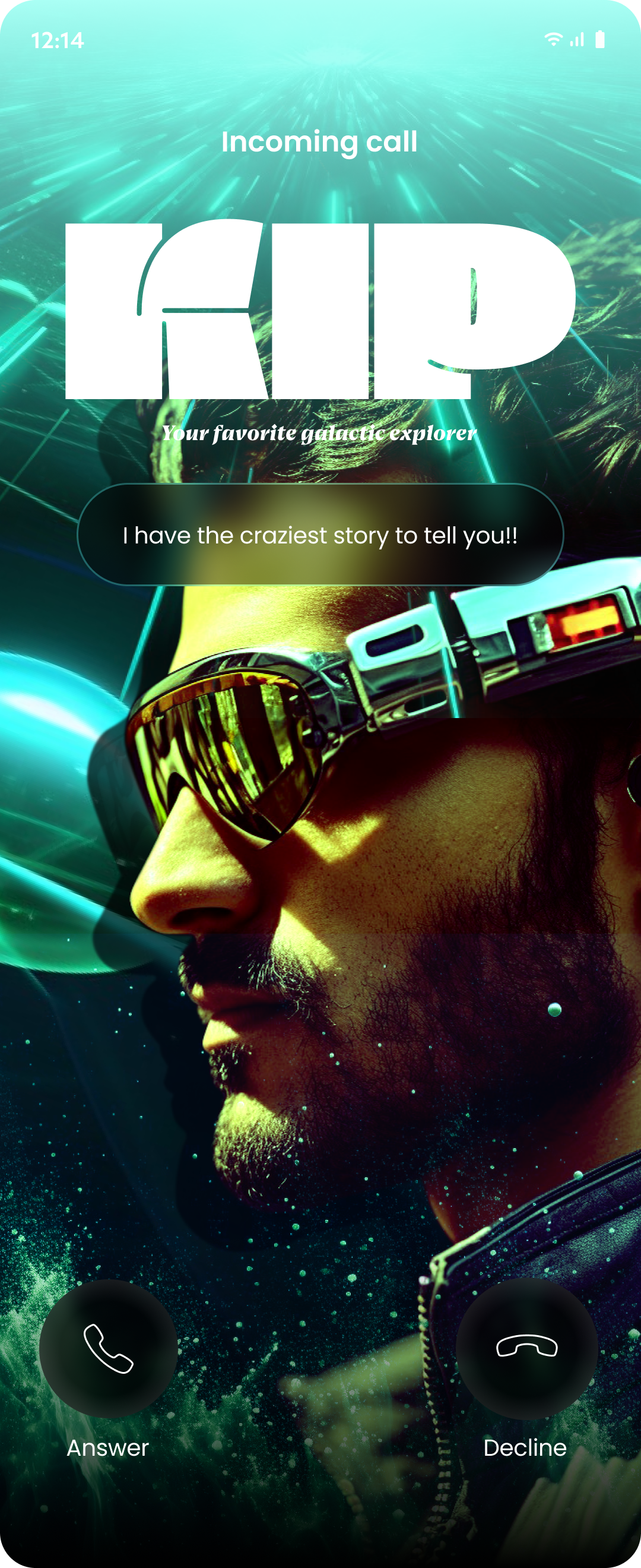
From his contact poster—
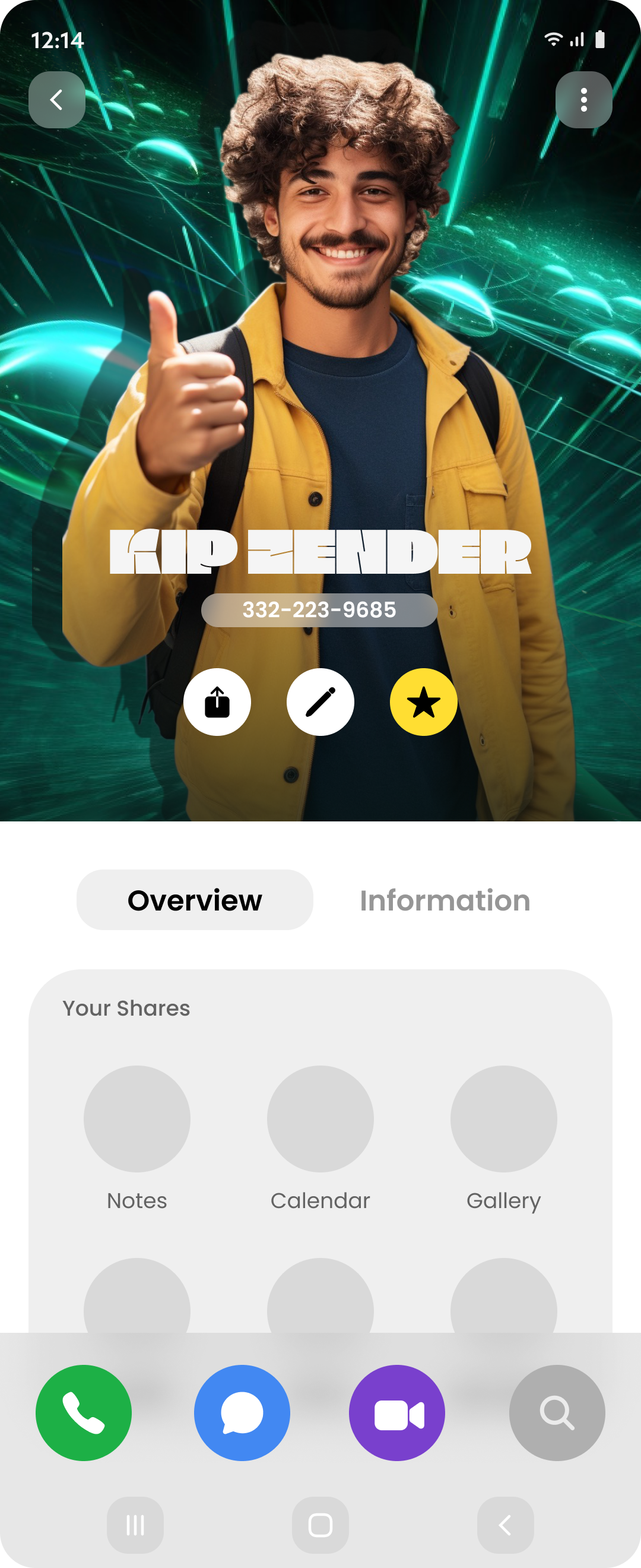
To his contact card.
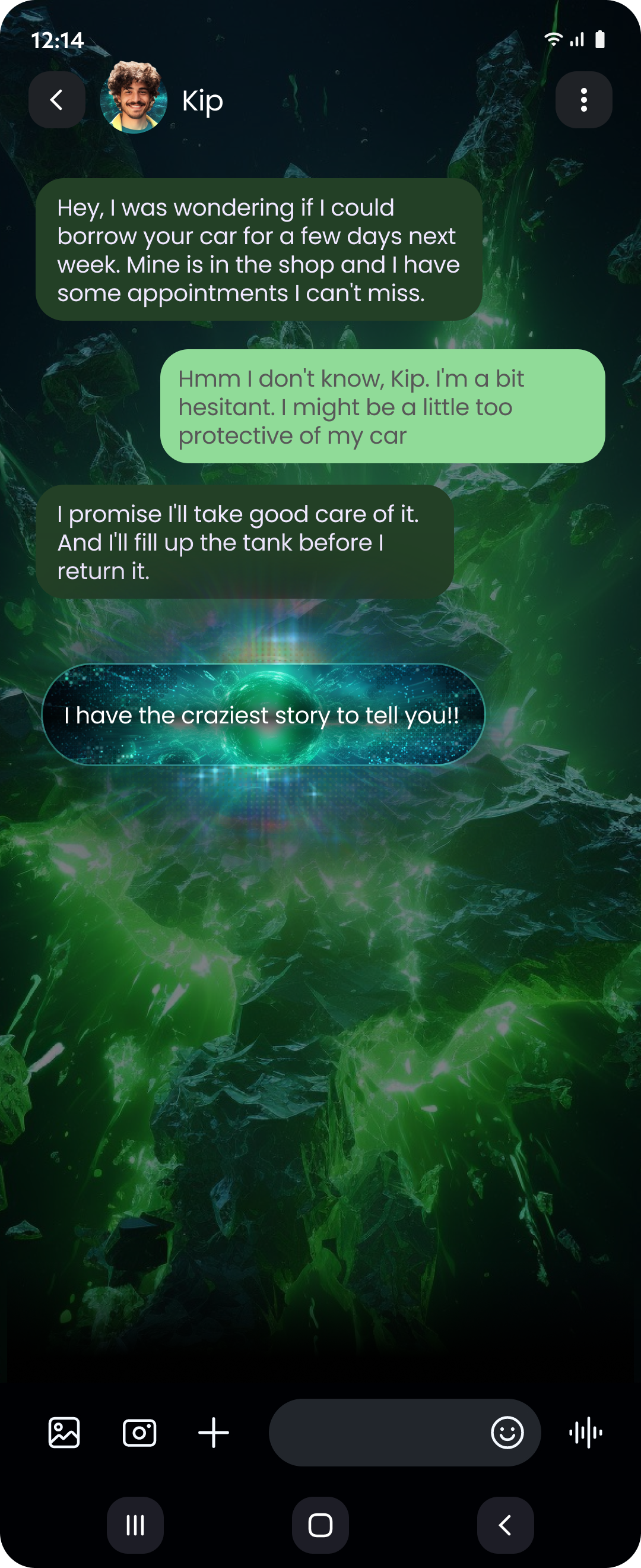
His messages with best friends exudes the sci-fi feel.
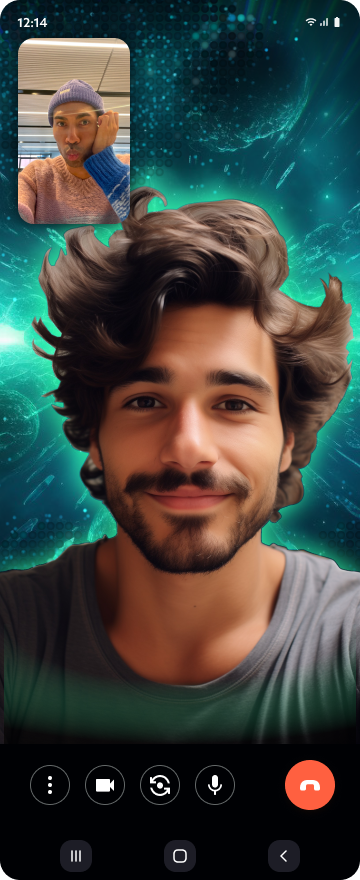
And even video call is consistently his space-y self.
Evolving the home screen
This exploration looked at customized widgets and app launchers on the home screen based on people and the apps that connect them.
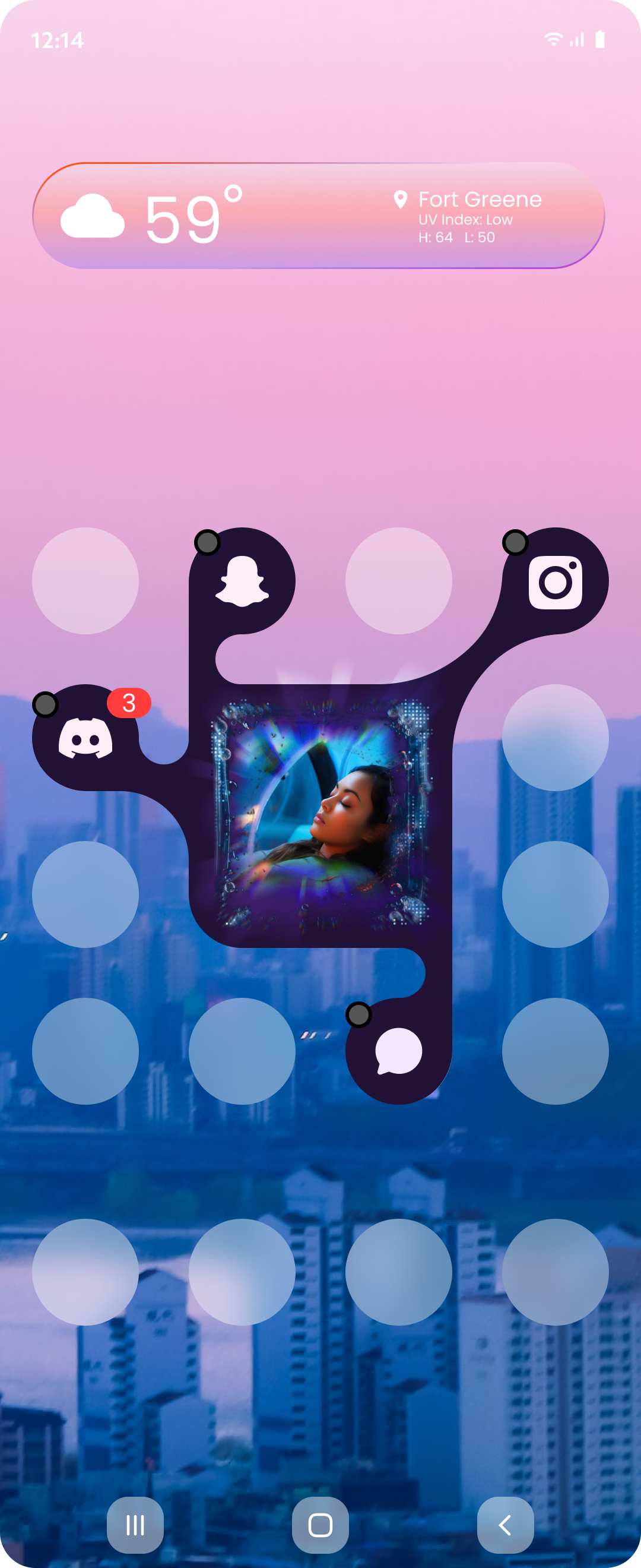
A contact’s activity status is rendered as a full visualization based on the data piped from the connected apps.
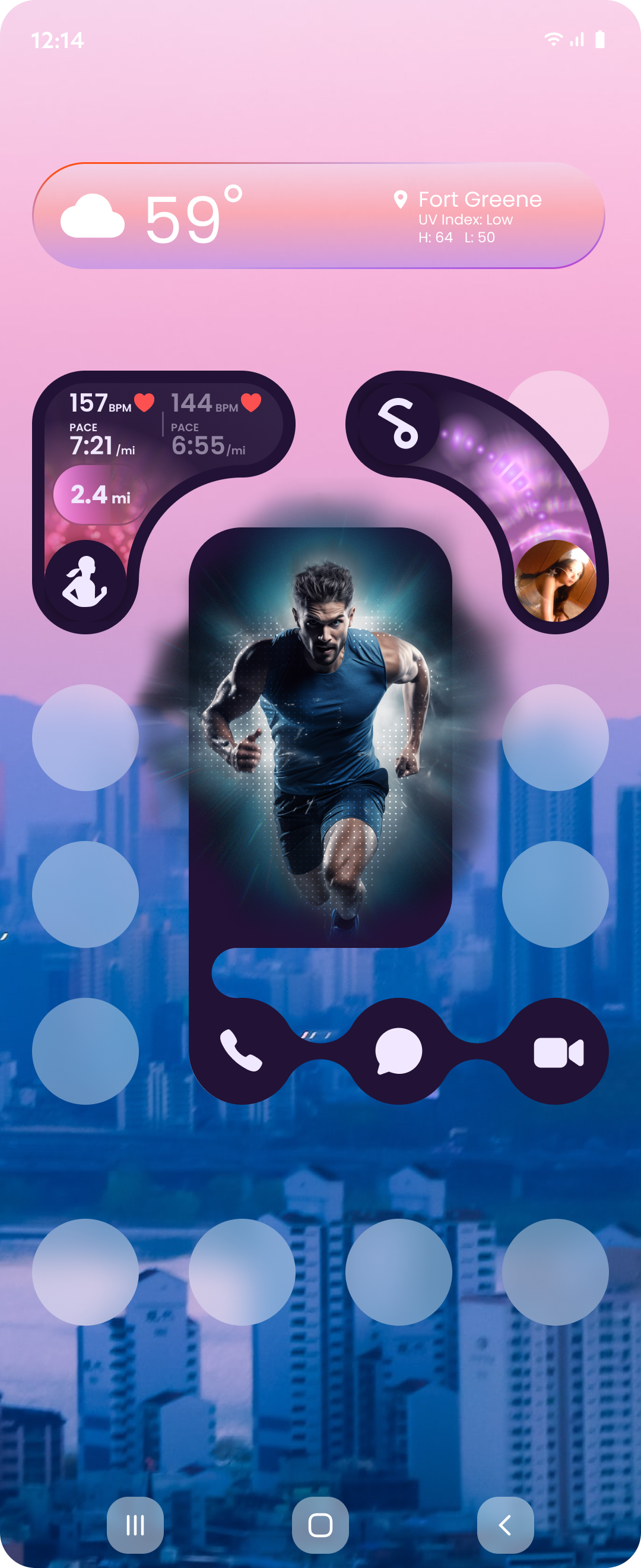
Two gym enthusiasts share health data and physical status.
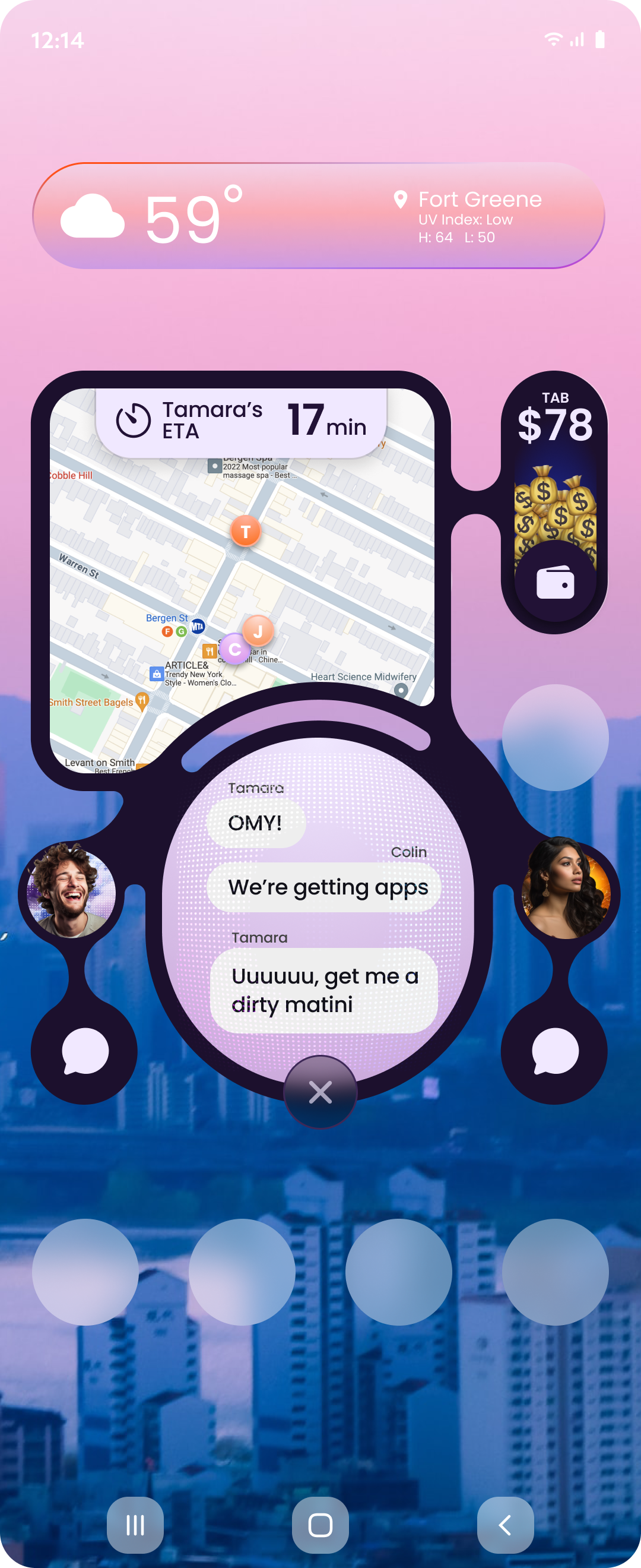
A group of friends have a widget that connects their messages, location, and Venmo account.
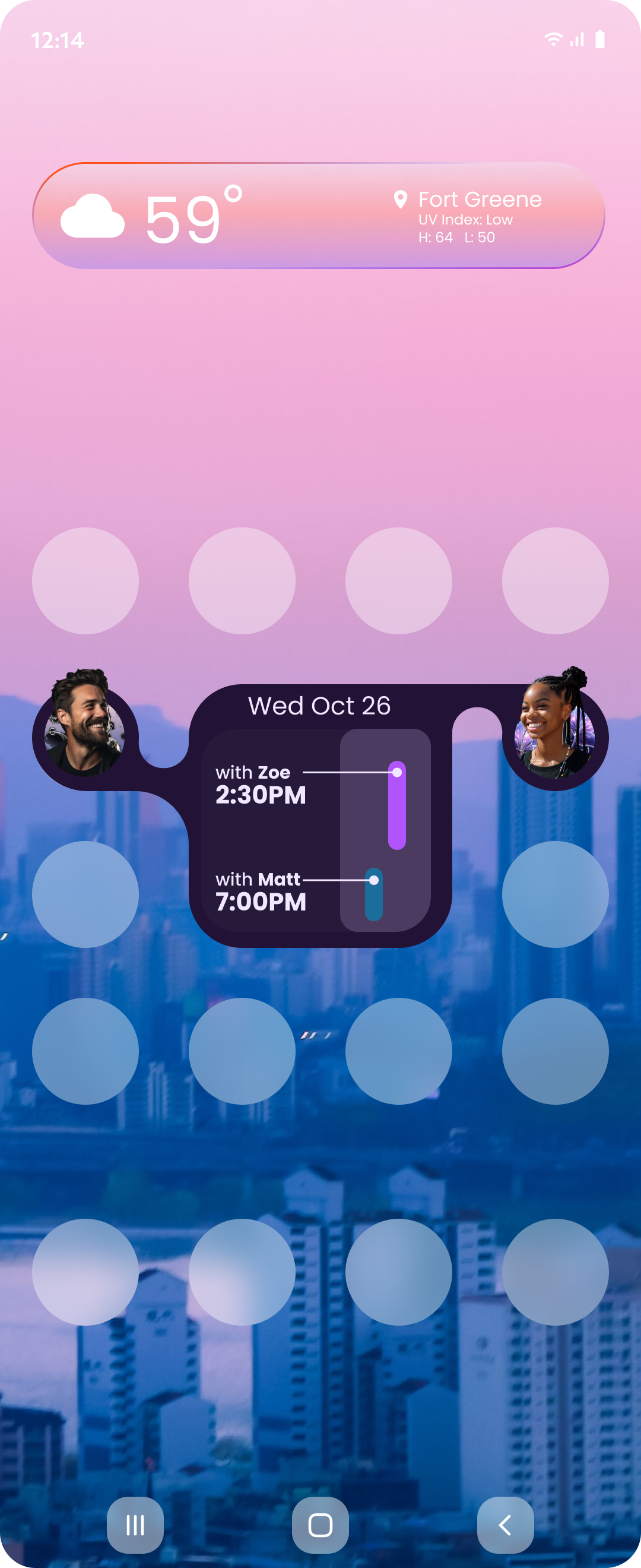
Two contacts share calendar information with the user.
Evolving the lock screen
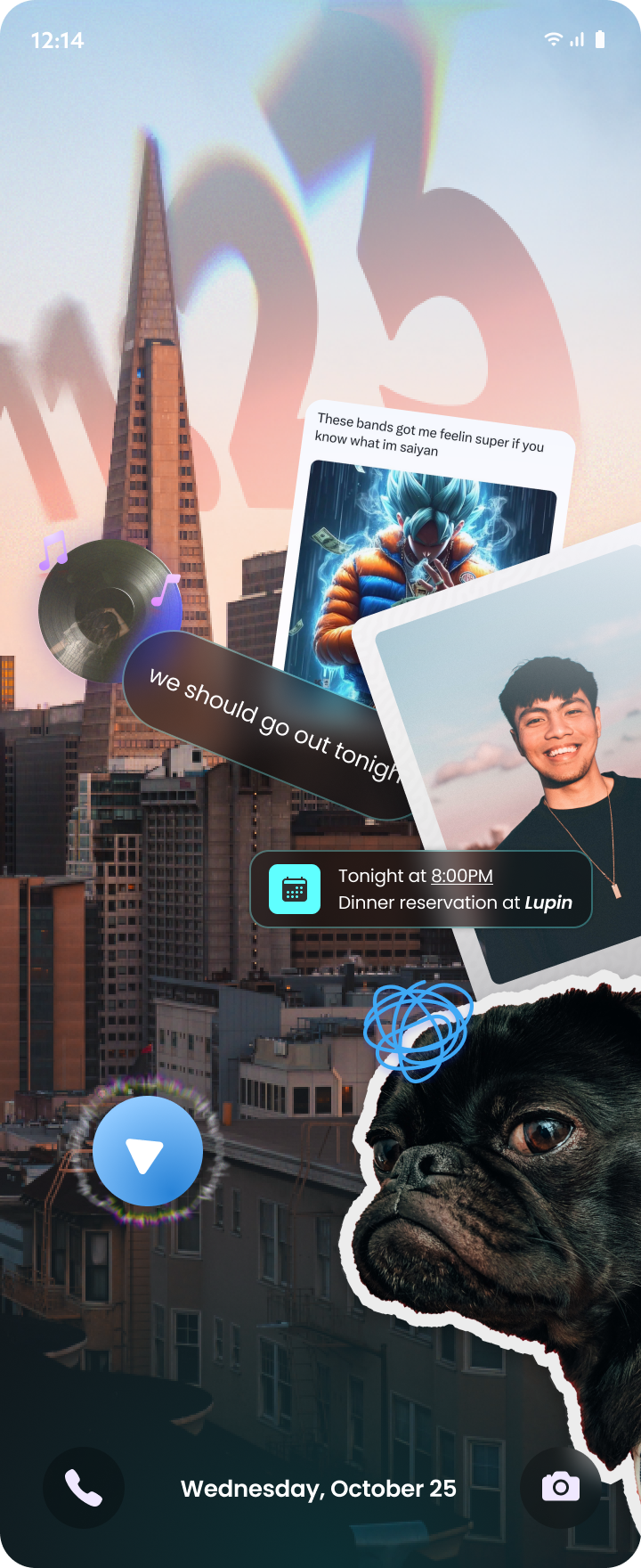
The lock screen creates a shared space among friends. People can drop links to songs, memes, calendar reminders for a movie, or just cute pics taken throughout the day.
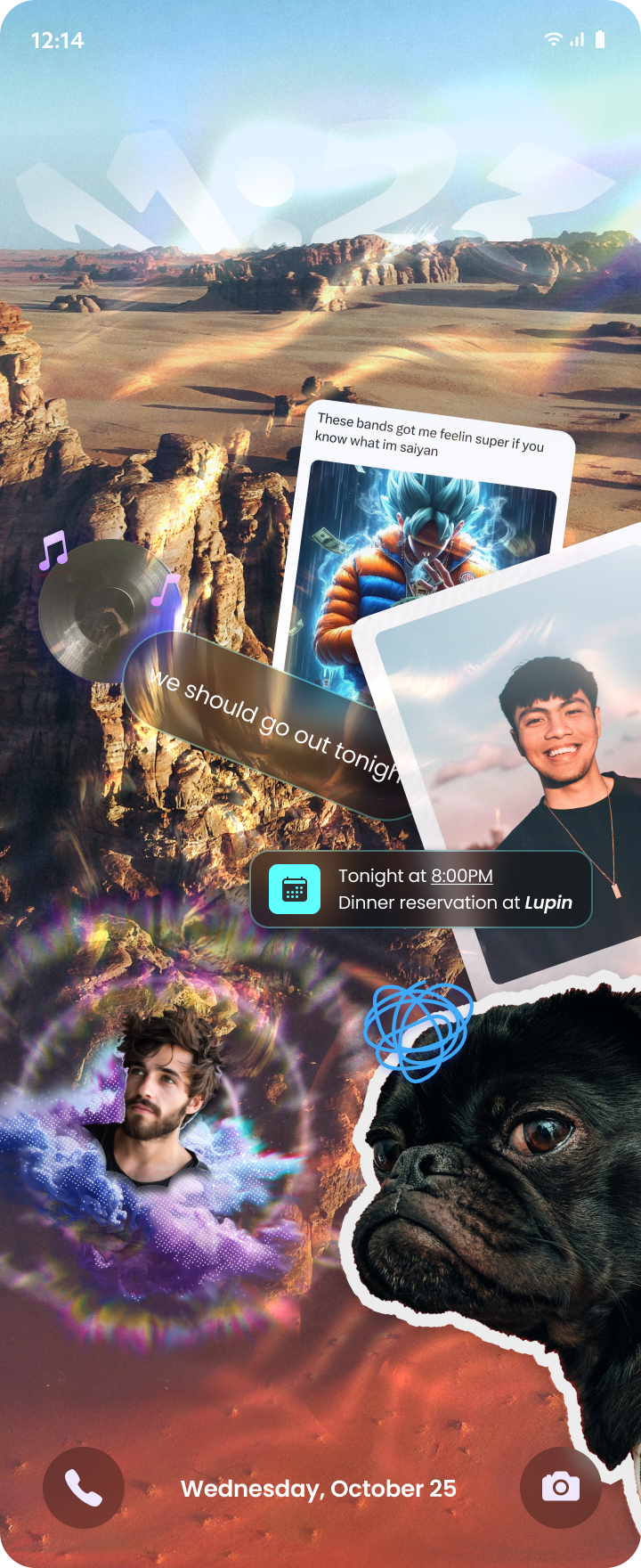
A contact’s activity status is rendered as a full visualization based on the data piped from the connected apps.
Two gym enthusiasts share health data and physical status.
CORE FUNCTION
A way to connect with friends that felt more emotional, immediate, up-to-date, and not buried within several different apps across the system.
Designed to have a sketchbook-like aesthetic that alludes to bygone days of Myspace and 90’s Internet culture.
RECAP
PROBLEM
People organize information in ways that’s in tension with how System UX is designed.
Research
User research uncovered that many people were frustrated with an app-centric model.
Impact
Initial staging and buy-in of an app-less / agentic framework for future One UI development. Later evolutions of the project further solidified its adoption.
AI HOME
Home
Patents and Awards
About
WINTER 2023
PEOPLE-CENTRIC OS
An early exploration into looking at how we could organize system UX based on the people in our phones. Instead of diving into apps, what if our data was organized by the people we engage with?
Focusing on People
This visual exploration looked into how people could be brought out of apps and into various touch points throughout system UI.
People on the home screen can be fun as well as communicate emotional details
Important people could be more visually distinguished
People could exist in frequented touch points like recents page
Search can also surface up contextual media or messages from that individual
Gen AI and Personalization
Generative AI can deploy a standardized aesthetic across system UI to give people the superpower to further personalize their devices.
The examples below show how Kip can customize his UI with a neon green, galactic theme.
From his contact poster—
To his contact card.
His messages with best friends exudes the sci-fi feel.
And even video call is consistently his space-y self.
Evolving the home screen
This exploration looked at customized widgets and app launchers on the home screen based on people and the apps that connect them.
A contact’s activity status is rendered as a full visualization based on the data piped from the connected apps.
Two gym enthusiasts share health data and physical status.
A group of friends have a widget that connects their messages, location, and Venmo account.
Two contacts share calendar information with the user.
Evolving the lock screen
The lock screen creates a shared space among friends. People can drop links to songs, memes, calendar reminders for a movie, or just cute pics taken throughout the day.
A contact’s activity status is rendered as a full visualization based on the data piped from the connected apps.
Two gym enthusiasts share health data and physical status.
CORE FUNCTION
A way to connect with friends that felt more emotional, immediate, up-to-date, and not buried within several different apps across the system.
Designed to have a sketchbook-like aesthetic that alludes to bygone days of Myspace and 90’s Internet culture.
RECAP
PROBLEM
People organize information in ways that’s in tension with how System UX is designed.
Research
User research uncovered that many people were frustrated with an app-centric model.
Impact
Initial staging and buy-in of an app-less / agentic framework for future One UI development. Later evolutions of the project further solidified its adoption.
AI HOME
Home
Patents and Awards
About
WINTER 2023
PEOPLE-CENTRIC OS
An early exploration into looking at how we could organize system UX based on the people in our phones. Instead of diving into apps, what if our data was organized by the people we engage with?
Focusing on People
This visual exploration looked into how people could be brought out of apps and into various touch points throughout system UI.
People on the home screen can be fun as well as communicate emotional details
Important people could be more visually distinguished
People could exist in frequented touch points like recents page
Search can also surface up contextual media or messages from that individual
Gen AI and Personalization
Generative AI can deploy a standardized aesthetic across system UI to give people the superpower to further personalize their devices.
The examples below show how Kip can customize his UI with a neon green, galactic theme.
From his contact poster—
To his contact card.
His messages with best friends exudes the sci-fi feel.
And even video call is consistently his space-y self.
Evolving the home screen
This exploration looked at customized widgets and app launchers on the home screen based on people and the apps that connect them.
A contact’s activity status is rendered as a full visualization based on the data piped from the connected apps.
Two gym enthusiasts share health data and physical status.
A group of friends have a widget that connects their messages, location, and Venmo account.
Two contacts share calendar information with the user.
Evolving the lock screen
The lock screen creates a shared space among friends. People can drop links to songs, memes, calendar reminders for a movie, or just cute pics taken throughout the day.
A contact’s activity status is rendered as a full visualization based on the data piped from the connected apps.
Two gym enthusiasts share health data and physical status.
CORE FUNCTION
A way to connect with friends that felt more emotional, immediate, up-to-date, and not buried within several different apps across the system.
Designed to have a sketchbook-like aesthetic that alludes to bygone days of Myspace and 90’s Internet culture.
RECAP
PROBLEM
People organize information in ways that’s in tension with how System UX is designed.
Research
User research uncovered that many people were frustrated with an app-centric model.
Impact
Initial staging and buy-in of an app-less / agentic framework for future One UI development. Later evolutions of the project further solidified its adoption.
AI HOME
Home
Patents and Awards
About